

Your four MBTI letters will not tell you which desk or chair to buy. What they can do is point you at four decisions every home office has to settle anyway: how much quiet and company you want, what you keep in front of you, what you base purchases on, and whether the room should stay fixed or keep changing. This page works through those four decisions with real workspaces from Maker Stations interviews, then gives one short, specific idea for each of the 16 types.
What the MBTI can and cannot tell you
The Myers-Briggs Type Indicator sorts people on four preference pairs: Extraversion or Introversion, Sensing or Intuition, Thinking or Feeling, and Judging or Perceiving. The four letters together give one of 16 types. The Myers & Briggs Foundation’s page on the preferences warns that the words do not mean what they mean in ordinary speech: “These words have a meaning in Jungian psychology (typology) that is different from the way they are used in everyday language.” Introversion, for example, is about where you get your energy, not about being shy.
How well the questionnaire measures those preferences is argued over. A systematic review and meta-analysis by Randall, Isaacson and Ciro in the Journal of Best Practices in Health Professions Diversity screened 221 potential studies and found only seven that met its criteria. The four validity studies agreed the instrument has reasonable construct validity. In the three test-retest studies, the Extravert-Introvert, Sensing-Intuition and Judging-Perceiving scales reached reliabilities of .75 or higher, and Thinking-Feeling reached .61. Most participants were college students, and the authors say the results apply most to that group.
An earlier analysis by Robert McCrae and Paul Costa, summarised on PubMed, found no support for the idea that the MBTI measures truly dichotomous preferences or distinct types. Instead it measures four fairly independent dimensions, which line up with four of the five dimensions of the Big Five personality model. If the scales are continuous, most people sit somewhere along each one rather than in one box or the other, and someone near the middle can easily land on a different letter when retested.
The publisher, The Myers-Briggs Company, makes a stronger case in its MBTI Facts: it says the four preference scales “have internal consistency reliabilities of around .90, and test-retest correlations are over .80 for periods up to 15 weeks”. It also responds to the common claim that 50 percent of people get a different result when retested, saying that all four letters have to match for a type to count as the same. The same page says the assessment “is not intended for use as part of a hiring process”. None of these sources tests whether a type predicts which workspace suits a person.
So read what follows the way the Foundation suggests reading the preferences: as prompts to notice what feels natural to you. Where your answer to one of the four questions below differs from what your letters predict, go with your answer.
The four questions behind the four letters
| Preference pair | What it describes | The workspace question | Where you see it in the interviews below |
|---|---|---|---|
| Extraversion (E) or Introversion (I) | Where you direct and get energy: the outer world of people and things, or your inner world | How much quiet do you need, and where will your contact with people come from? | A sealed attic room, a weekly coffee-shop day, a shared office split by colour |
| Sensing (S) or Intuition (N) | Whether you trust concrete facts and details or patterns and possibilities | What should be in front of you: the detail of today’s task, or the bigger picture? | A wall of printed quotes, a single theme set by one object, a vertical second screen |
| Thinking (T) or Feeling (F) | Whether decisions lean on objective logic or on personal values and people | What decides a purchase: the spec sheet or what the object means to you? | Buying on reviews, a gaming PC built for efficiency, a desk mascot, a gift from a friend |
| Judging (J) or Perceiving (P) | Whether you like a planned, settled life or a flexible, open-ended one | Should the room have a fixed place for everything, or be easy to change? | Drawers with a slot for every gadget, a desk on castors, a monitor on a travel tripod |
1. Extraversion or Introversion: quiet, company and sound
Of the four pairs, this is the one the Foundation links directly to where you work: among the things it says this preference affects are “the work environment we like” and how we recharge at the end of a day. People who prefer Introversion gain energy by reflecting on ideas and experiences; people who prefer Extraversion gain it by interacting with people.
There is some laboratory evidence on sound, although it uses Hans Eysenck’s measure of extraversion rather than the MBTI. In a study published in Ergonomics, Adrian Furnham and Lisa Strbac had 38 introverts and 38 extraverts do reading comprehension, prose recall and mental arithmetic in silence, with background music, and with office noise. Performance was worse with music and noise than in silence, and on the reading task introverts were hurt more than extraverts. A later part-replication by Koo, McClelland and Furnham with ninety-three female Chinese participants found no difference between the sound conditions and no difference between introverts and extraverts, and the authors suggest the participants were used to noisy surroundings. The practical reading: if you do close reading or writing and you find sound distracting, take the door, the headphones and the room’s position seriously, whatever your letters say.

Photos: Zwitzh’s secret attic workspace of a street artist in Copenhagen, Denmark
The street artist Zwitzh (photo above) took quiet as far as it goes: a room in the attic of his apartment building, closed off with boards and insulation, with a faux padlock “so it appears locked when I’m inside”. Even so, his advice on working alone is to stay in touch: regular check-ins with friends, colleagues and customers matter “so that one’s home office does not just end up in a floating ego bubble.”
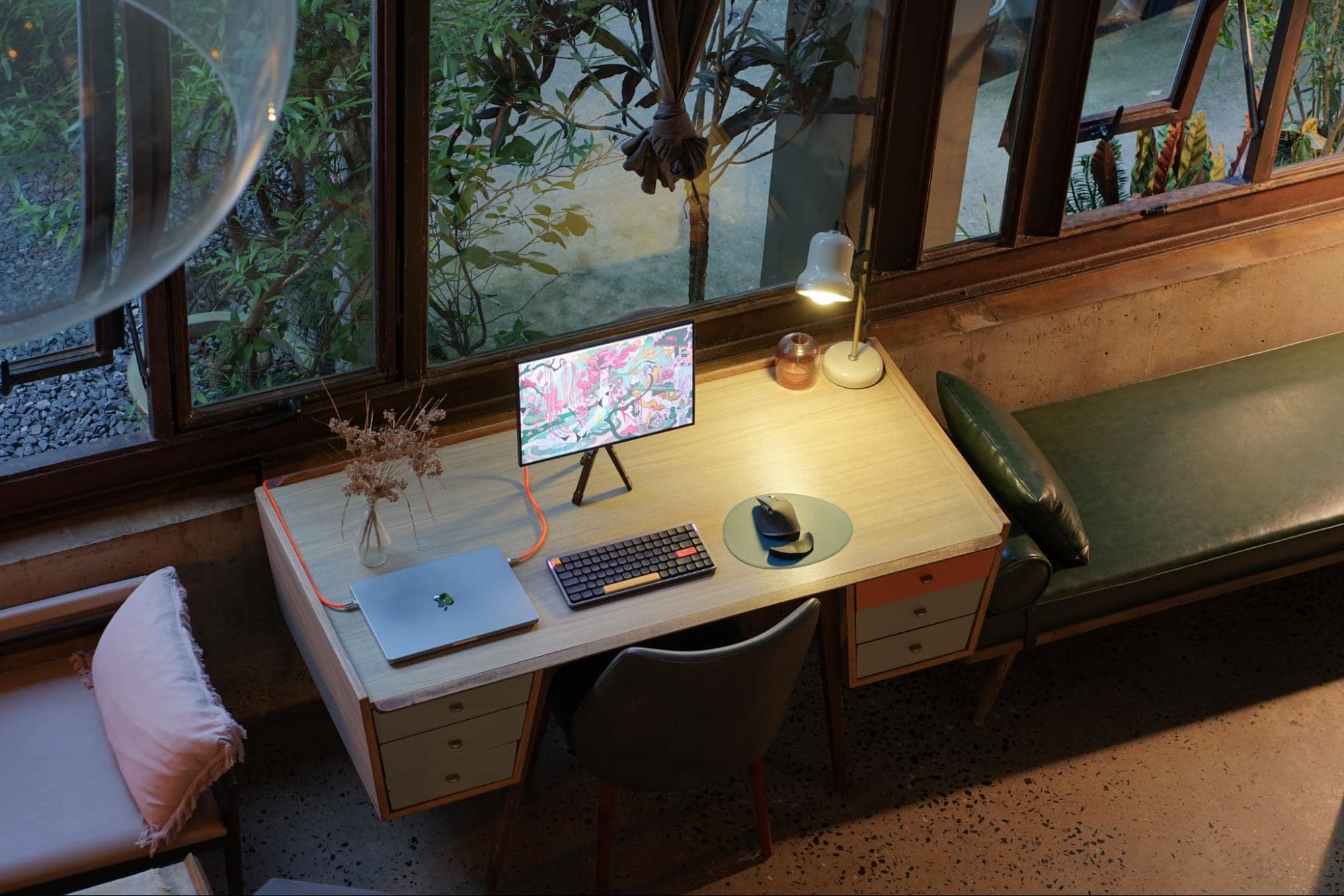
The consultant Bronzegated, who works from a portable setup in Tokyo and other cities (above), puts it this way: “I’m an introverted person, so I like to plan my activities sparsely across weeks, or do things spontaneously.” The one-screen setup follows from wanting focus, not company: “Having just one monitor kind of narrows my focus, which I actually find really helpful for deep analytical and reasoning tasks.”
Photos: Christine Maggi’s bright design Gal Studio workspace in San Francisco Bay Area, US
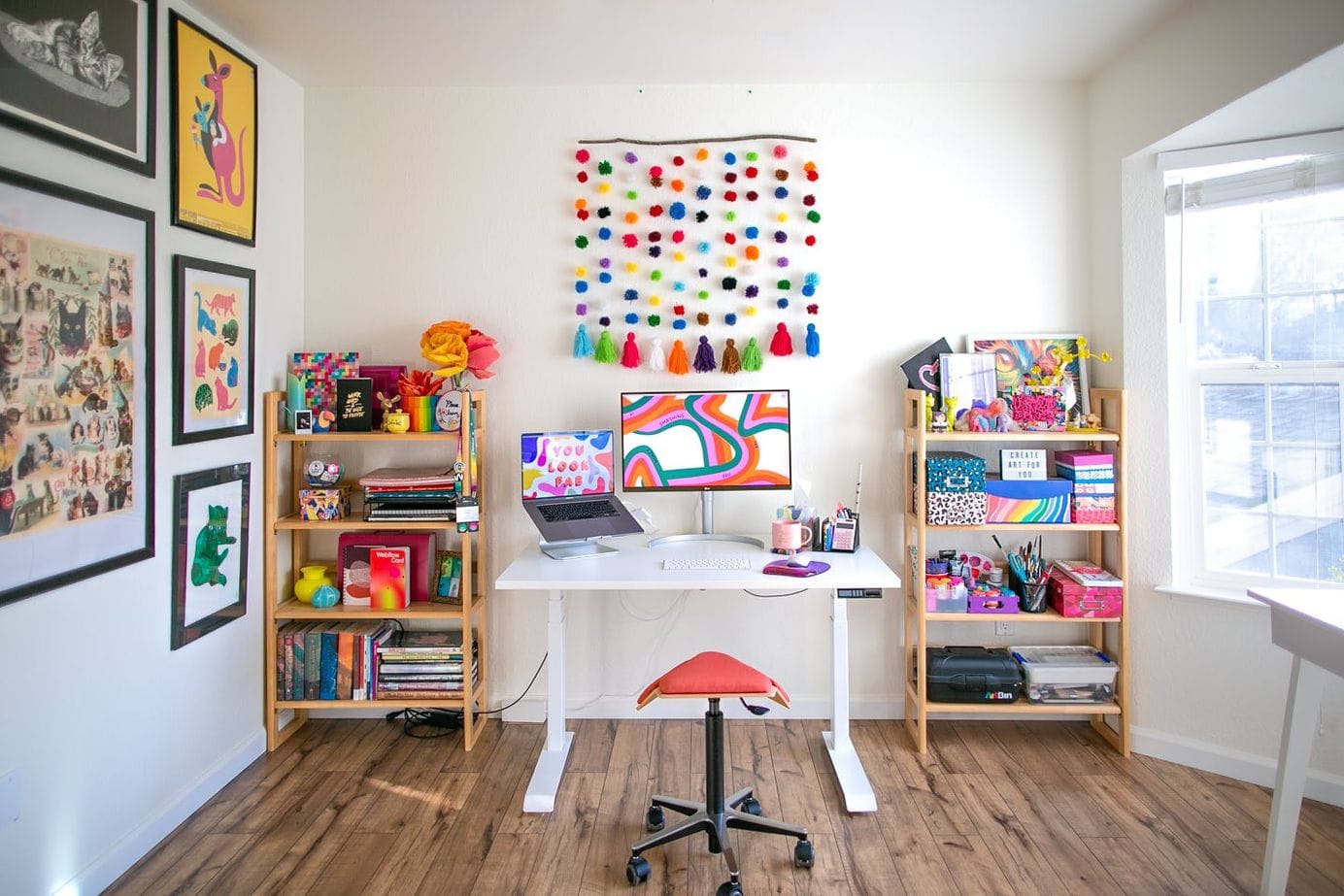
Designer Christine Maggi (above) built people back into a solo routine. “I think it’s important to have a change of scenery, especially if you work alone,” she says, and she works from a coffee shop about once a week. Her office itself leans the other way from a quiet cell: she prefers “bright and colourful spaces with a lot of light and fun things to look at”, with a wall of thrifted posters and prints.
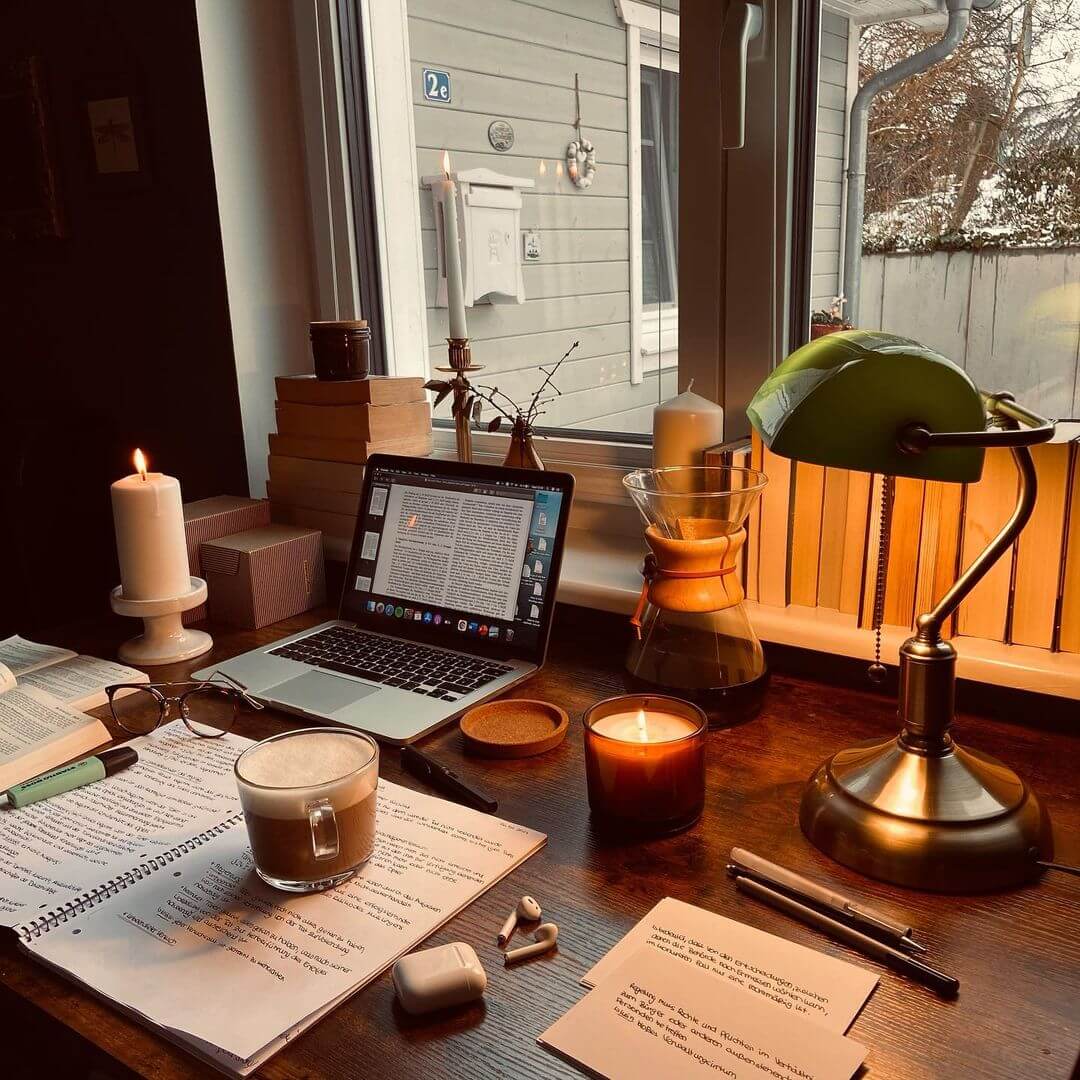
Law student Olja Lobkis (above) shares her home office with her boyfriend and gave it velvet armchairs and a sofa as well as the desk: “It is nice to have an alternative space to work and study in the same room.” What working from home took away was other people: “The only thing I miss is the social aspect.”
Two more owners show the same trade-off from different sides. Business analyst Jake, whose workspace appears further down, says: “Although I need to focus deeply and can be easily distracted by others, I sometimes miss those casual water cooler chats.” Roland Austria, who shares a living room with his wife (photo in section 3), solved the shared-space problem visually: “To separate our work area though, I embraced the now growing all-black theme of my setup.”
What to decide: how you will control sound (a door, a room away from the household, closed-back headphones), and where regular contact with people will come from, whether that is a shared room, a second seat for a visitor or a fixed day out of the house.
2. Sensing or Intuition: what you keep in front of you
According to the Foundation, people who prefer Sensing tend to “Focus on facts and specifics” and like step-by-step instructions, while people who prefer Intuition tend to “Look at the big picture” and focus on patterns and future possibilities. On a desk, that becomes a question of what you put in your line of sight: the detail of the task at hand, or reminders of where the work is going.
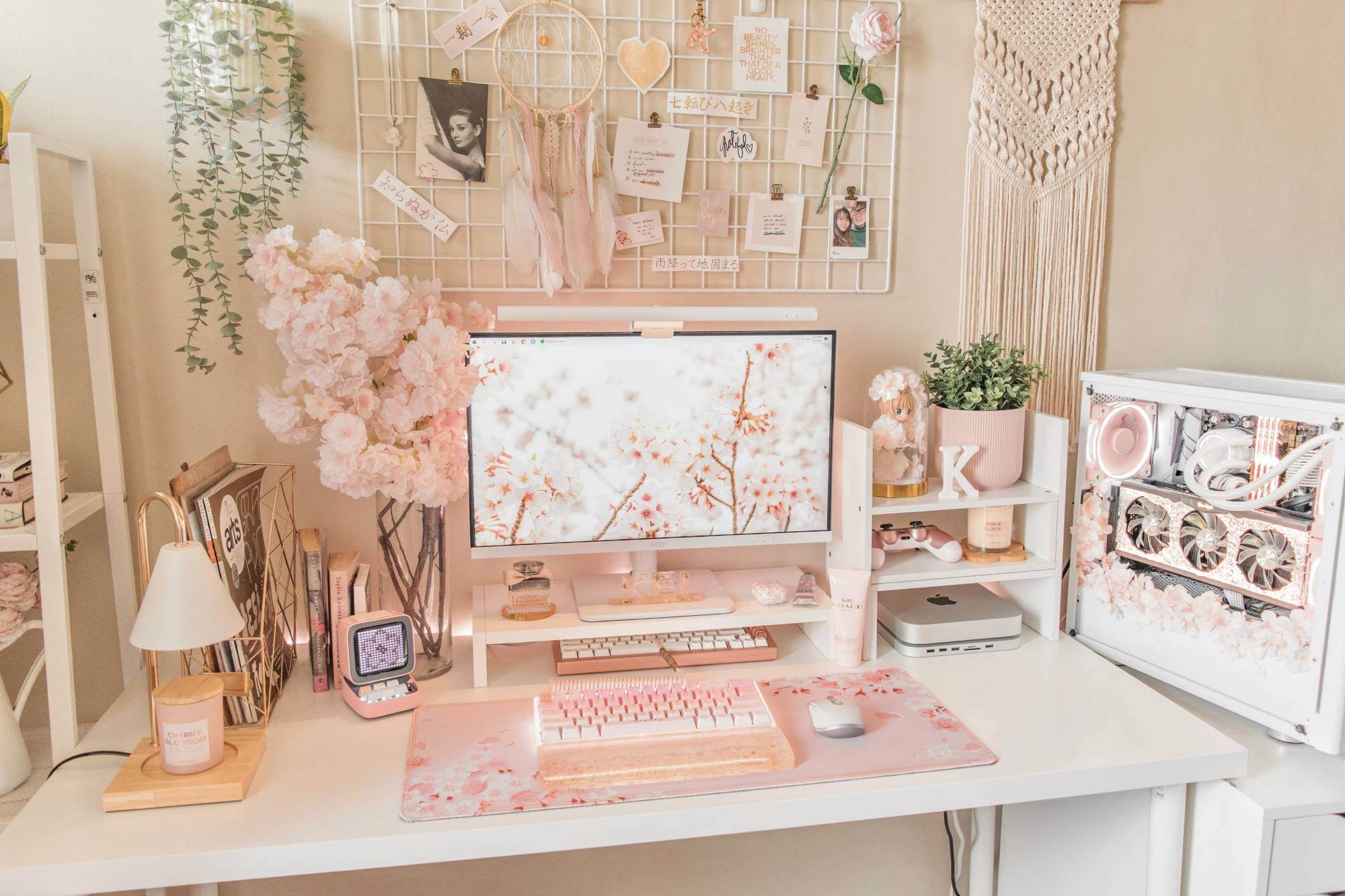
Kei Yoshikawa (above) gave the space above and behind her computer to a grid of printed quotes, Japanese idioms, photos and cards from friends: “I guess just having those visual affirmations help a lot when I’m starting to lose track of things or feel down.” Across her small room she keeps a second desk for a different mode of work: “I use the second desk when I’m reading, painting, journaling, or when I just don’t particularly feel like working in front of the computer.”

Photos: ER Doctor’s super ultrawide desk setup in Florida, USA
Joseph, an ER physician in Florida (above), starts from the whole picture: “My biggest tip would simply be to have a vision and build around it.” His 49-inch super ultrawide exists for overview, not gaming: “The screen real estate has allowed me to work on multiple spreadsheets at a time, all while managing emails, videos, music, etc., with space to spare.”
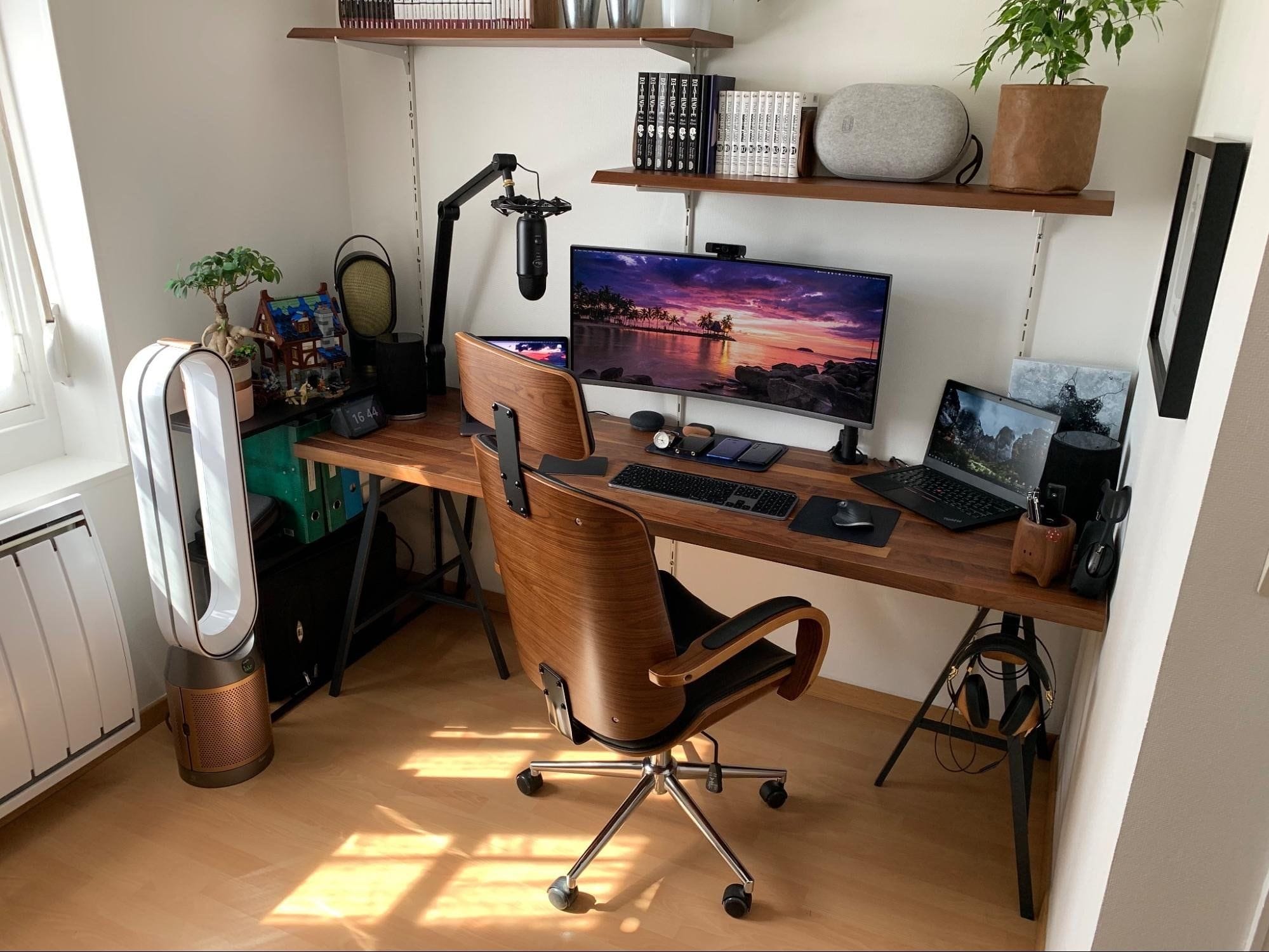
Cédric (above) built his entire room around one concrete object, a pair of headphones whose earcups a friend remade in walnut: “So I redesigned my entire workspace based on the custom-made earcups of my headphones — walnut.” His rule for anyone redoing a setup: “Find an element (a theme, a colour, or an object) and stay on it.”

Photos: DarkMatrixZero’s Twitch streaming desk Setup in East Midlands, UK
DarkMatrixZero (above), a pathology laboratory assistant who streams on Twitch, splits information across screens: a horizontal main monitor for the primary task, and “My vertical monitor will have a secondary task.” When streaming, that second screen shows the streaming software and chat. Her advice is concrete: “Plan out the area for the equipment you need to use daily and add something visually accessible to keep you motivated!”
What to decide: whether your wall and second screen hold today’s specifics (a task list, reference documents, a vertical screen for chat or a board) or the longer view (a goals board, a pinboard of ideas, one object that sets the theme).
3. Thinking or Feeling: what decides a purchase
The Foundation describes Thinking as the preference to “put more weight on objective principles and impersonal facts when decision-making”, and Feeling as the preference to “put more weight on personal concerns and the people involved when decision making”. For a workspace, the obvious test is shopping: do you choose on the spec sheet and reviews, or on what an object means to you and the people you share the room with? Most setups in the interviews do both, in different places.
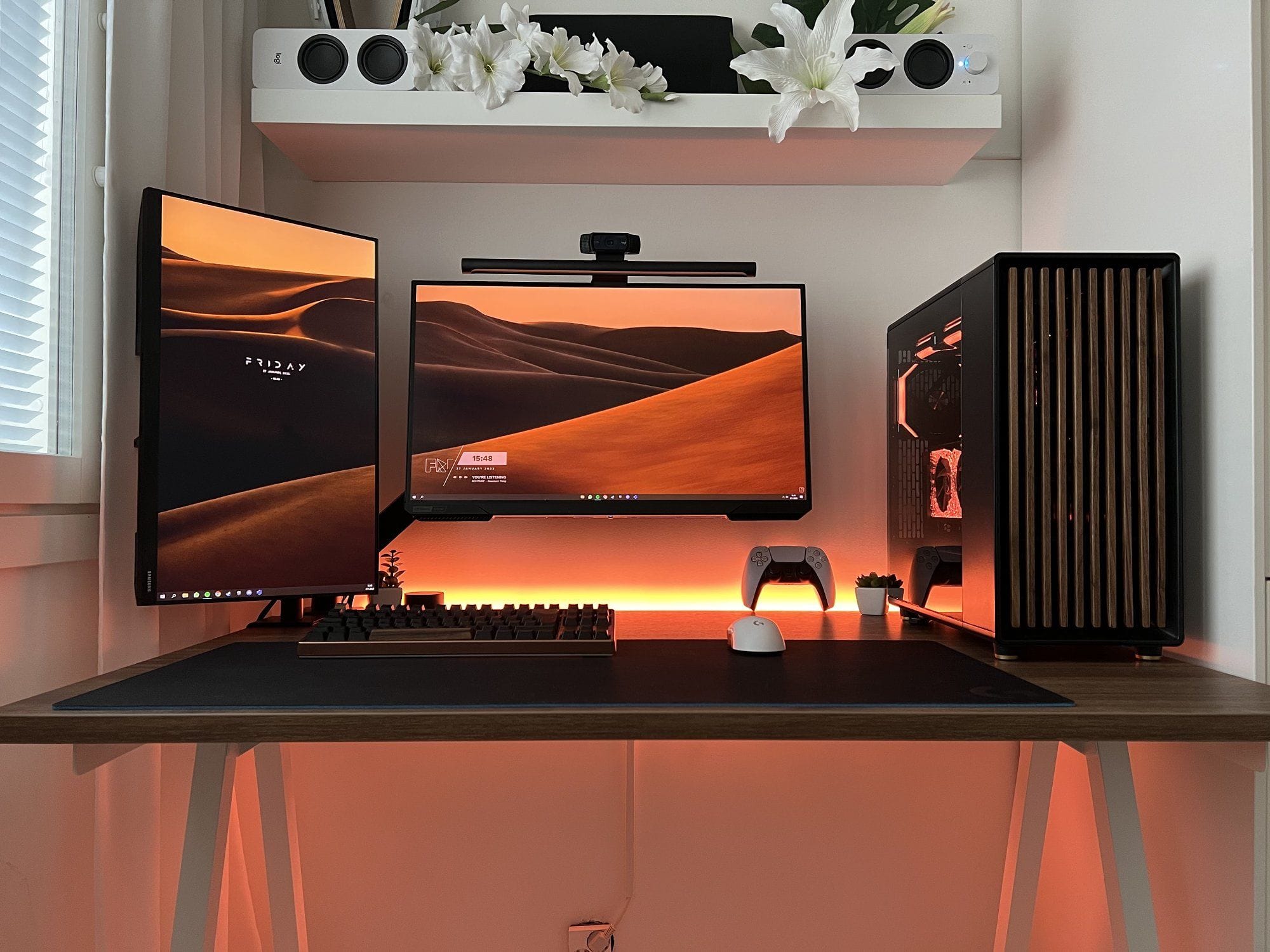
Energy engineering student Joel Honkanen (above) puts it plainly: “The key features of my setup are aesthetics and efficiency.” His tip for other makers is about getting the specs right first: find out in advance how powerful the PC components are and what monitors you need, so you do not have to replace them straight away. And because his desk is small, “I prefer to keep my desk clean and free from extra stuff due to its small size.”

Roland Austria (above) describes a shift towards evidence-led buying: “I’ve finally stopped sorting by the cheapest item first when browsing online. Instead, I base my purchases on reviews and their reputation.” His wooden dish, though, is handmade in the Philippines, his home country, and his posters match his wife’s in black and white.
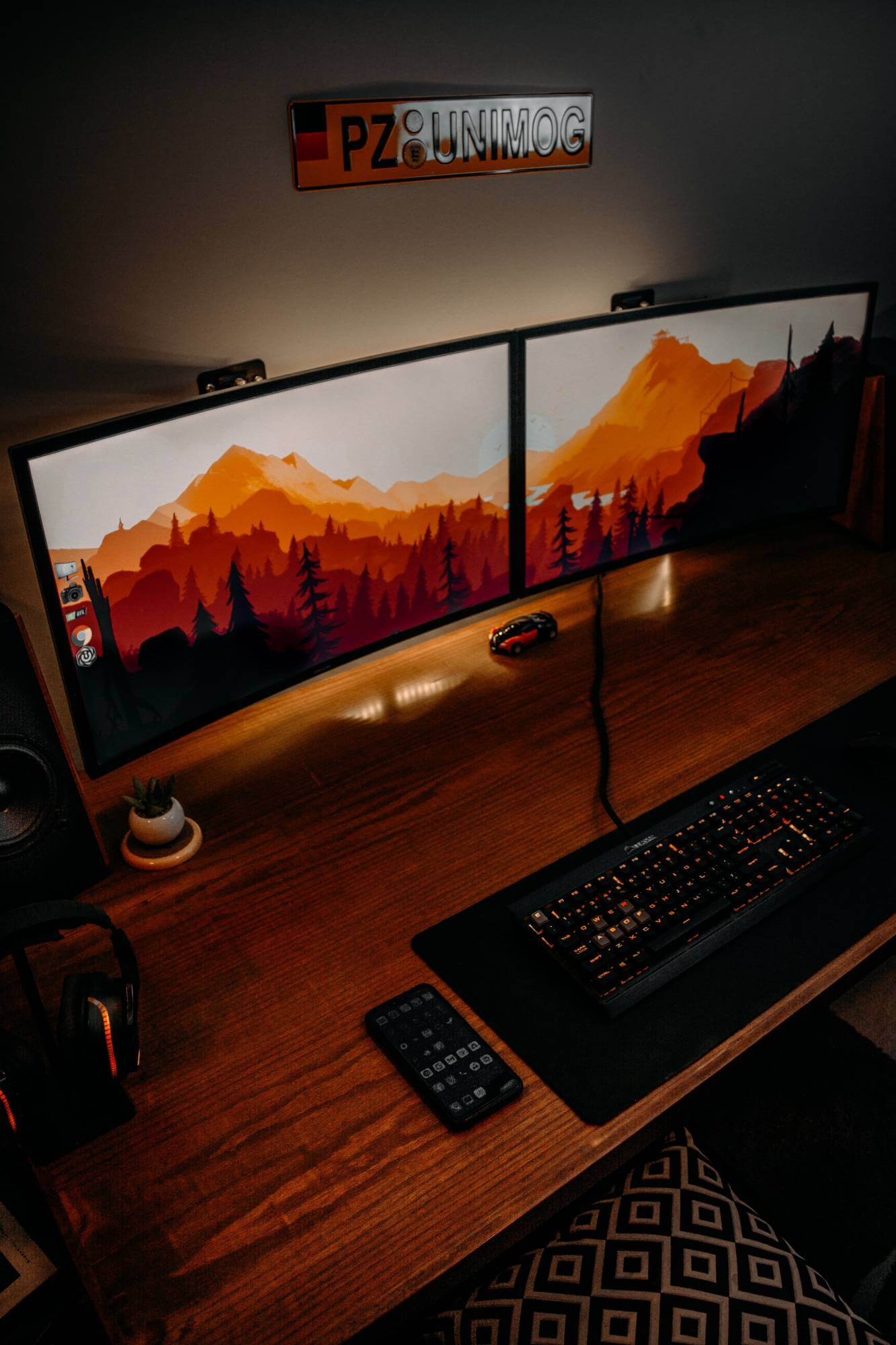
Amr Taha (above), an interior designer and product photographer in Cairo, is unsentimental about hardware: “Not a hell of a rig, but I’m not that crazy guy who replaces all PC parts every year.” The money and care went into the room instead: warm-toned lamps, shelves made by hand to match the desk, and wall frames made by a friend. Next to the desk he keeps a leather bar chair: “Two or three times a day I come here to sit, relax, have some coffee, clear my head and recharge.”
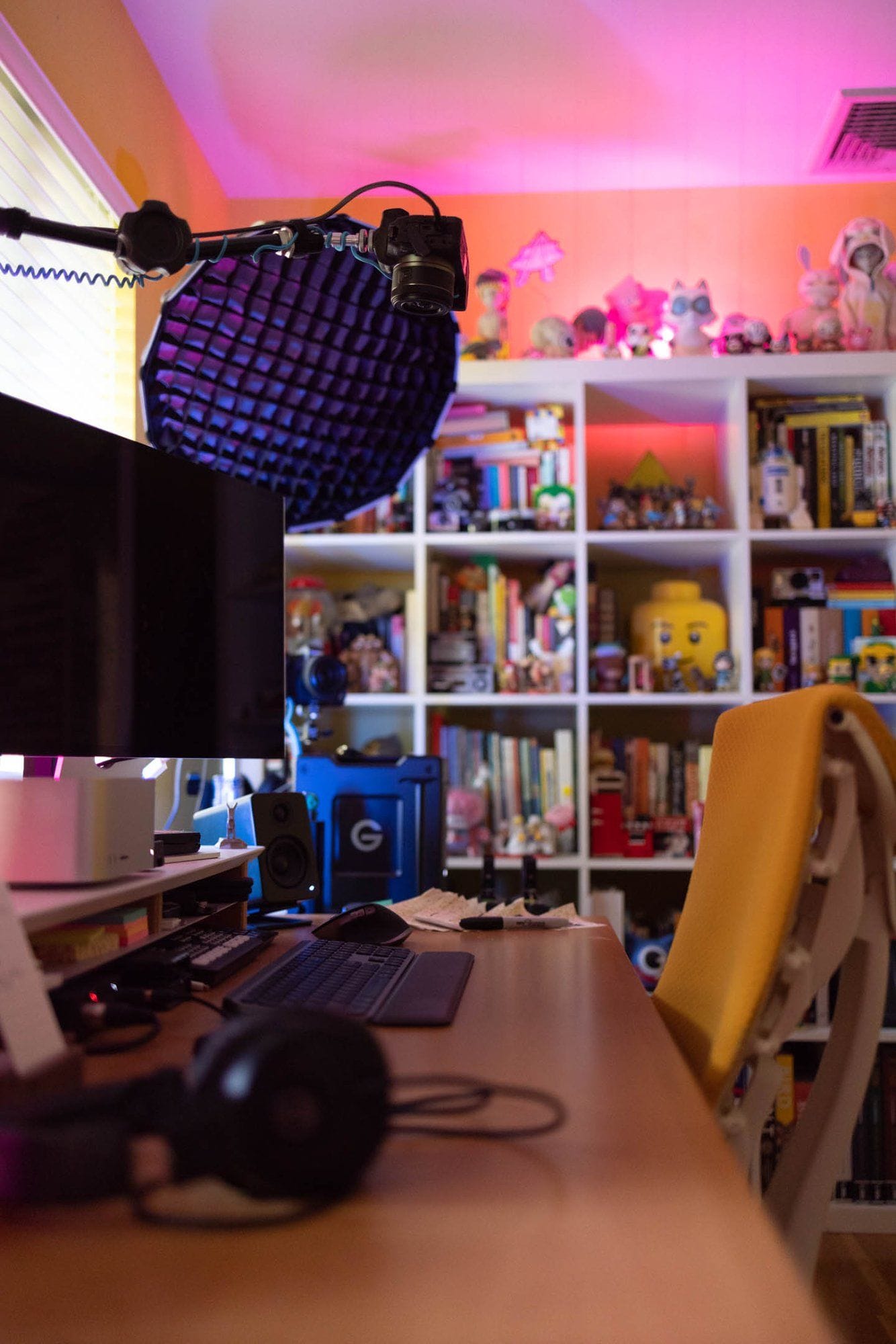
Photos: Rina Miele’s joyful design desk setup in New York City, US
Creative director Rina Miele (above) has two 5K displays and a Mac Studio, and still says the tools are not the point: “You’ve got to feel at ease, so your mind has room to think.” Her favourite object is a 3D-printed metal goat from a branding project for a client: “It feels like a little trophy that I’ve won.” DarkMatrixZero’s lightbox, a gift from a close friend during a hard time, does the same job on her desk.
What to decide: which items get the spec-sheet treatment (usually chair, screen and computer) and which are allowed to be chosen for meaning (the objects in your line of sight). Writing that split down stops you from buying a chair because it looks right, or filling a shelf with things that mean nothing to you.
4. Judging or Perceiving: a fixed place for everything, or room to change
People who prefer Judging, in the Foundation’s description, “Like organization and structure” and make and follow schedules. People who prefer Perceiving tend to keep options open and “Adapt to emerging information”. In a room, that is the difference between storage designed around every item and furniture that moves.
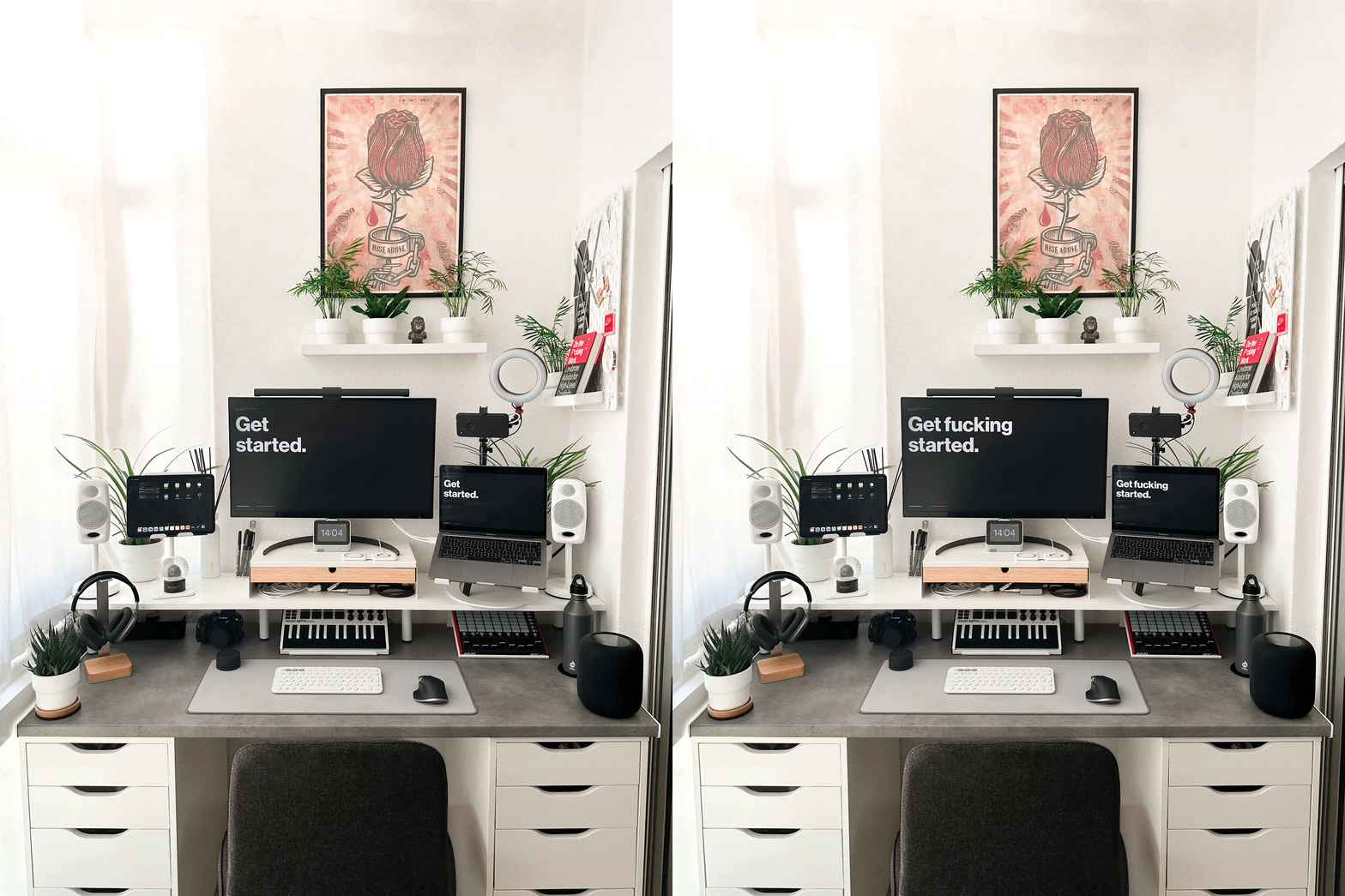
Copywriter Alex Napier Holland (above) planned a narrow balcony room with a tape measure, the IKEA catalogue and a spreadsheet, and fitted cutlery trays into his drawers for gadgets: “I like every item to have a place — and this physical limitation stops me from relentlessly buying more tech.” The drawers are also a focus tool: “Items that could distract me are hidden in drawers — while items that I should use more (guitar, camera, MIDI controllers) are on display.”
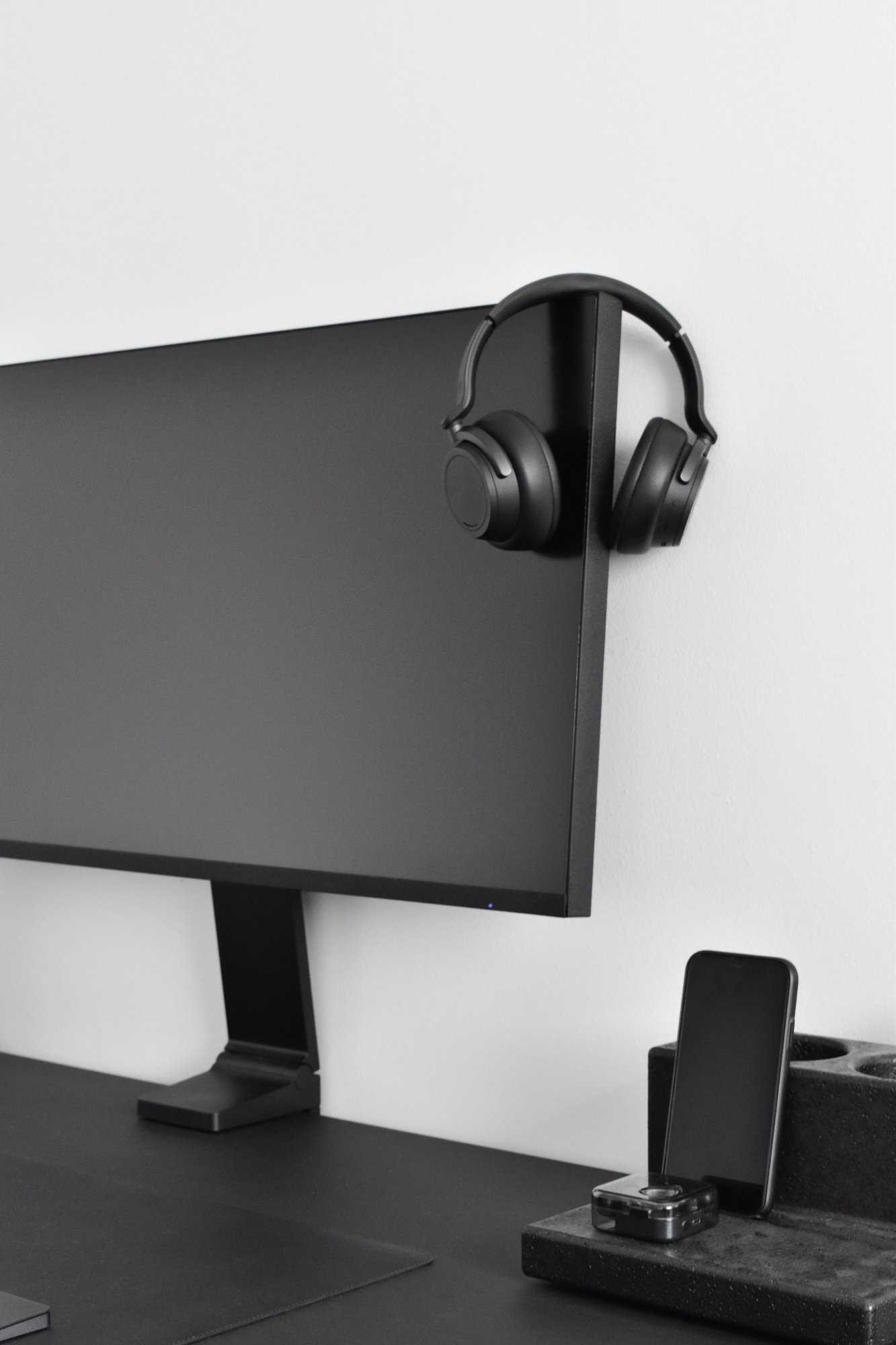
Product designer Carl Barenbrug (above) shares a home office with his partner and bought matching desks, monitors and chairs so the two setups look uniform. “My days are pretty routine. I like routine.” His tip is about storage: “Having space to put things you don’t use on a daily basis is key to keeping a clean and pared back workspace.”

Game developer Raymond Cripps (above) fits a full workstation under a loft bed by putting away what he is not using: “But if I’m not using them, I put them in a drawer, out of sight.” He has also changed how he uses his screens: “I recently started using my secondary monitor vertically.”

Jake (above) built his elm desks to allow for change: “I wanted my main PC desk to remain clutter-free and always accessible, while also having room for various side projects”. “My main desk has a sit-stand base, ideal for longer meetings or multitasking on home projects.”
At the flexible end, Joseph chose a standing-desk base and had castors fitted “to allow it to be a moveable setup”, and Bronzegated mounts a portable monitor on a tripod so the setup fits whatever desk turns up while travelling. Bronzegated also wants more than one way to work: “I need a setup that gets me moving, helps me switch between tasks, and gives me the freedom to walk around and shake things up with different scenes.” Christine Maggi mixes sitting, standing and a walking pad. Even the most free-form setup here needs some structure, as Zwitzh admits about procrastination: “The best antidote is dates, hours, points in time and especially deadlines if you have to get something done.”
What to decide: whether to invest in fitted storage with a slot for every item, or in furniture that moves and adjusts (castors, a sit-stand base, a monitor arm or a second surface for side projects). Either way, decide how the desk gets reset at the end of the day.
16 home office ideas, one for each type
Each idea below combines the four answers above for one type. None of the people in the interviews has been typed here; the ideas draw on the preferences, not on anyone’s personality.
- ISTJ — The Inspector (Introverted, Sensing, Thinking, Judging)
- ISFJ — The Protector (Introverted, Sensing, Feeling, Judging)
- INFJ — The Advocate (Introverted, Intuitive, Feeling, Judging)
- INTJ — The Architect (Introverted, Intuitive, Thinking, Judging)
- ISTP — The Craftsman (Introverted, Sensing, Thinking, Perceiving)
- ISFP — The Composer (Introverted, Sensing, Feeling, Perceiving)
- INFP — The Mediator (Introverted, Intuitive, Feeling, Perceiving)
- INTP — The Thinker (Introverted, Intuitive, Thinking, Perceiving)
- ESTP — The Dynamo (Extraverted, Sensing, Thinking, Perceiving)
- ESFP — The Performer (Extraverted, Sensing, Feeling, Perceiving)
- ENFP — The Champion (Extraverted, Intuitive, Feeling, Perceiving)
- ENTP — The Visionary (Extraverted, Intuitive, Thinking, Perceiving)
- ESTJ — The Supervisor (Extraverted, Sensing, Thinking, Judging)
- ESFJ — The Provider (Extraverted, Sensing, Feeling, Judging)
- ENFJ — The Giver (Extraverted, Intuitive, Feeling, Judging)
- ENTJ — The Commander (Extraverted, Intuitive, Thinking, Judging)
ISTJ: a closed, measured room with a slot for everything
Quiet, concrete, spec-led and settled: this combination suits planning the room once and properly. Measure before you buy, choose the chair and screen on their specifications, and give every item a drawer or tray so the desk resets in a minute. If you have no spare room, Converting a closet into a home office gives you a door to close as well as fixed storage.
Read also: Wooden Desk Setup of a Developer in Italy
ISFJ: a quiet corner with a second seat and an evening reset
The Feeling preference puts people and comfort into the decisions, and Judging asks for routine. Plan a quiet desk plus somewhere softer to read or talk, such as an armchair, keep personal objects to a few that have a fixed place, and make clearing the desk at the end of the day part of the routine rather than a weekend job.
Read also: Warm, Stress-Free Workspace with Vertically Stacked Monitors in Brisbane, Australia
INFJ: one screen for deep work and one wall for the long view
Introversion and Intuition together suggest protecting long stretches of focus while keeping the bigger picture visible. Try a single main screen with nothing urgent on a second one, and give the wall behind the monitor to goals, quotes or plans you want to see when you look up, rather than to today’s to-do list.
Read also: Zen Workspace in Trondheim, Norway
INTJ: design the room on paper before buying anything
Intuition plus Thinking plus Judging is the most natural fit for planning the whole layout in advance: a floor plan, a CAD sketch or a spreadsheet of every item with its footprint and power needs. Buy against that plan, choose on specifications, and leave one planning surface, such as a whiteboard, for the projects that run longer than a week.
Read also: Minimal Architect Workspace in Quezon City, Philippines
ISTP: a second surface for fixing things
Sensing and Perceiving together point to practical, physical work that changes from day to day. Keep the computer desk clear and add a separate, tougher surface for repairs, models or electronics, with tools hung within reach. A DIY desk made from a worktop and drawer units is easy to change when the projects change.
Read also: IKEA Desk Setup with Concrete Panels in Bydgoszcz, Poland
ISFP: materials on show, in a room only you use
With Introversion, Sensing, Feeling and Perceiving, the room works best as a private studio where the materials you use are visible and easy to rearrange. Open shelves and pegboards keep paints, tools and paper in sight, and objects with personal meaning can stay out on display instead of being put away.
Read also: Creative Hand-Painted Home Office in Bucharest, Romania
INFP: a second desk away from the screen
Intuition and Feeling with an open-ended Perceiving style suggest a place to think and make things that is not the computer. If the room allows, put a small second table or reading chair facing away from the monitor, for writing, sketching or journaling by hand, and let the wall around it collect what inspires you.
Read also: Dreamy Blue Gaming Room in California, US
INTP: a compact setup built for parallel windows
Introverted, abstract, logic-led and flexible: here the work is often several sources open at once and a layout that keeps changing. A rotating or vertical second screen, window-management software and a whiteboard for working problems out cost little space, and suit a tucked-away corner or a desk under a loft bed.
Read also: DIY PVC Minimalist Battlestation in Florida, US
ESTP: furniture that moves
Extraversion, Sensing and Perceiving together suggest a room for action rather than a fixed station. A sit-stand desk on castors, a monitor arm, and clear floor space let you rearrange the room for a call, a build or a workout, and storage you can reach from standing keeps the moves quick.
Read also: Apple-like PC Desk Setup in New York City, US
ESFP: a room with space for someone else
Extraversion and Feeling with a flexible style point to sharing the space. Plan for a second chair or a sofa where a partner, friend or client can sit, speakers good enough for music in the background, and bright, colourful walls. Keep the work desk itself simple so it can be cleared quickly when people come in.
Read also: Sunny and Clean Desk Setup in New York City
ENFP: several zones and a regular day out
Extraversion and Intuition with Perceiving suggest variety: different spots for different modes, and contact with people built into the week. Give the room at least two zones, such as a desk and a lounge chair, change the inspiration wall often, and plan a fixed day to work from a café or a shared space.
Read also: Cyberpunk-Inspired Gaming Setup in the Philippines
ENTP: a call-ready desk with a board to argue on
Extraversion, Intuition, Thinking and Perceiving add up to a lot of talking ideas through. Put money into the webcam, microphone and lighting for calls, give a whiteboard a place within the camera’s view or next to the desk, and use a wide screen or two screens so you can keep sources open while you debate them.
Read also: Tech YouTuber’s Multi-Purpose Home Office Setup in Mumbai, India
ESTJ: a visible calendar and labelled storage
Extraversion, Sensing, Thinking and Judging favour schedules that other people can see too. A wall calendar or a screen showing the week, filing drawers with labels, and a desk with nothing on it except the current job follow from that. A move towards minimalism suits it, because there is less to keep in order.
Read also: Minimalist Monochromatic Home Office Setup in Romania
ESFJ: a shared office that works for both of you
Extraversion and Feeling with Judging suggest working alongside others in an organised way. If you share the room, agree a layout in which each person has their own desk, storage and lighting, a shared board for household or family dates, and some visual line, such as a colour scheme, that marks whose area is whose.
Read also: Small and Cosy WFH workspace in New York City, US
ENFJ: a camera-facing desk with a message you chose
Extraversion and Feeling with Intuition and Judging suggest a lot of time with people on screen and a clear sense of purpose. Face the desk so the light falls on you rather than behind you, keep what is in the camera’s view tidy, and put one message or object you chose, a lightbox or a print, where you see it when you are not on a call.
Read also: Minimal Standing Desk Setup with a View in New Jersey, US
ENTJ: screen space for the whole picture
Extraversion, Intuition, Thinking and Judging favour overview and control. An ultrawide or two large screens with window-snapping software let you keep a schedule, email and the working documents visible at once, and a calendar that marks deadlines in colour keeps the plan in front of you.
Read also: Creative Director’s Dual Display Home Office in Baltimore, US
Whichever letters you got, the four questions are the useful part: how much quiet and company you want, what stays in your line of sight, what you buy on specs and what on meaning, and whether the room stays fixed or keeps moving. Answer those for yourself and the setup follows.
We’re a reader-supported publication. This article might contain affiliate links. It means we may receive a commission if you click a link and buy a product that our maker has recommended. The article was written independently.
