

Pick a burnout book by the part of burnout you are dealing with, not by its cover. The World Health Organization describes burnout as three things happening together: exhaustion, growing distance or cynicism about your job, and a feeling that you are no longer effective. Each of the ten books below speaks mainly to one of those, or to the working conditions behind them, and their authors range from a health researcher and two clinicians to journalists and former executives.
One thing first: a book is not treatment. If you are struggling to cope, read the section on when to get help before anything else.
What burnout is, and why that matters for choosing a book
In the 11th revision of its International Classification of Diseases (ICD-11), the WHO defines burn-out as “a syndrome conceptualized as resulting from chronic workplace stress that has not been successfully managed”. It lists three dimensions: “feelings of energy depletion or exhaustion”, “increased mental distance from one’s job, or feelings of negativism or cynicism related to one’s job”, and reduced professional efficacy. The WHO is explicit that burn-out is an occupational phenomenon and is not classified as a medical condition, and that the term refers to work, not to other areas of life.
That three-part definition comes from decades of research led by the psychologist Christina Maslach. In a 2016 review in World Psychiatry, Maslach and Michael Leiter set out the six areas of working life where a mismatch between person and job feeds burnout: “workload, control, reward, community, fairness, and values”. They also link each dimension to a different kind of fix. Exhaustion responds to lighter workloads and better recovery: “Initiatives to moderate workload demands complemented by improvements in recovery strategies through better sleep, exercise, and nutrition have direct relevance to the exhaustion component of burnout.” Cynicism “pertains more directly to a sense of community or to the congruence of personal and workplace values”. A sense of efficacy, they suggest, may respond more to recognition from colleagues and leaders.
The same review carries a warning worth keeping in mind with any self-help book: “there is very little research that has evaluated the efficacy of any of these approaches in reducing the risk of burnout”. None of the books below is a tested intervention. They are ways of thinking about the problem, and the honest test is whether one changes something about how you work.
Working from home does not change the definition, but it does remove some of the buffers. Isa, a law student and mother interviewed on this site, puts it plainly: “The fine line between working hours and rest hours gets blurred.” Her top tip is “do not make yourself available 24/7 for work or school just because you work/study from home!” (Isa’s workspace interview).
The ten books at a glance
| Book | Author’s background | Mainly addresses |
|---|---|---|
| Burnout: The Secret to Unlocking the Stress Cycle | Emily Nagoski (PhD in health behaviour) and Amelia Nagoski (DMA) | Exhaustion and stress physiology |
| Rest: Why You Get More Done When You Work Less | Alex Soojung-Kim Pang, historian of science and futurist | Exhaustion and recovery |
| Thrive | Arianna Huffington, media founder writing from her own collapse | Exhaustion and recovery |
| The Happiness Trap | Russ Harris, physician and ACT therapist | Stress and difficult thoughts |
| How to Stay Human in a F*cked Up World | Tim Desmond, psychotherapist | Stress and difficult thoughts |
| First, We Make the Beast Beautiful | Sarah Wilson, journalist, writing about her own anxiety | Anxiety (not burnout as such) |
| Feel-Good Productivity | Ali Abdaal, doctor turned YouTuber | Cynicism and meaning in the work |
| The Joy of Missing Out | Tanya Dalton, productivity author and speaker | Workload and priorities |
| Dare to Lead | Brené Brown, research professor | The workplace: leaders and culture |
| Radical Candor | Kim Scott, former Google and Apple manager | The workplace: feedback and management |
The author backgrounds come from each publisher’s or author’s own page, linked in the sections below. The “mainly addresses” column is our sorting against the WHO and Maslach framework, based on how each publisher and author describes the book.
If the main problem is exhaustion
This is the dimension most people mean when they say “burnt out”, and the one Maslach and Leiter tie most directly to rest, sleep and a manageable workload. Lisa Martinovská, a product designer in Prague, describes how it crept up on her: “For almost a year, I had been working constantly and wondered what was causing my exhaustion in the evenings.” Her advice: “Take a break, or your body will take one for you.” (Lisa’s workspace interview)
1. “Burnout: The Secret to Unlocking the Stress Cycle” by Emily and Amelia Nagoski
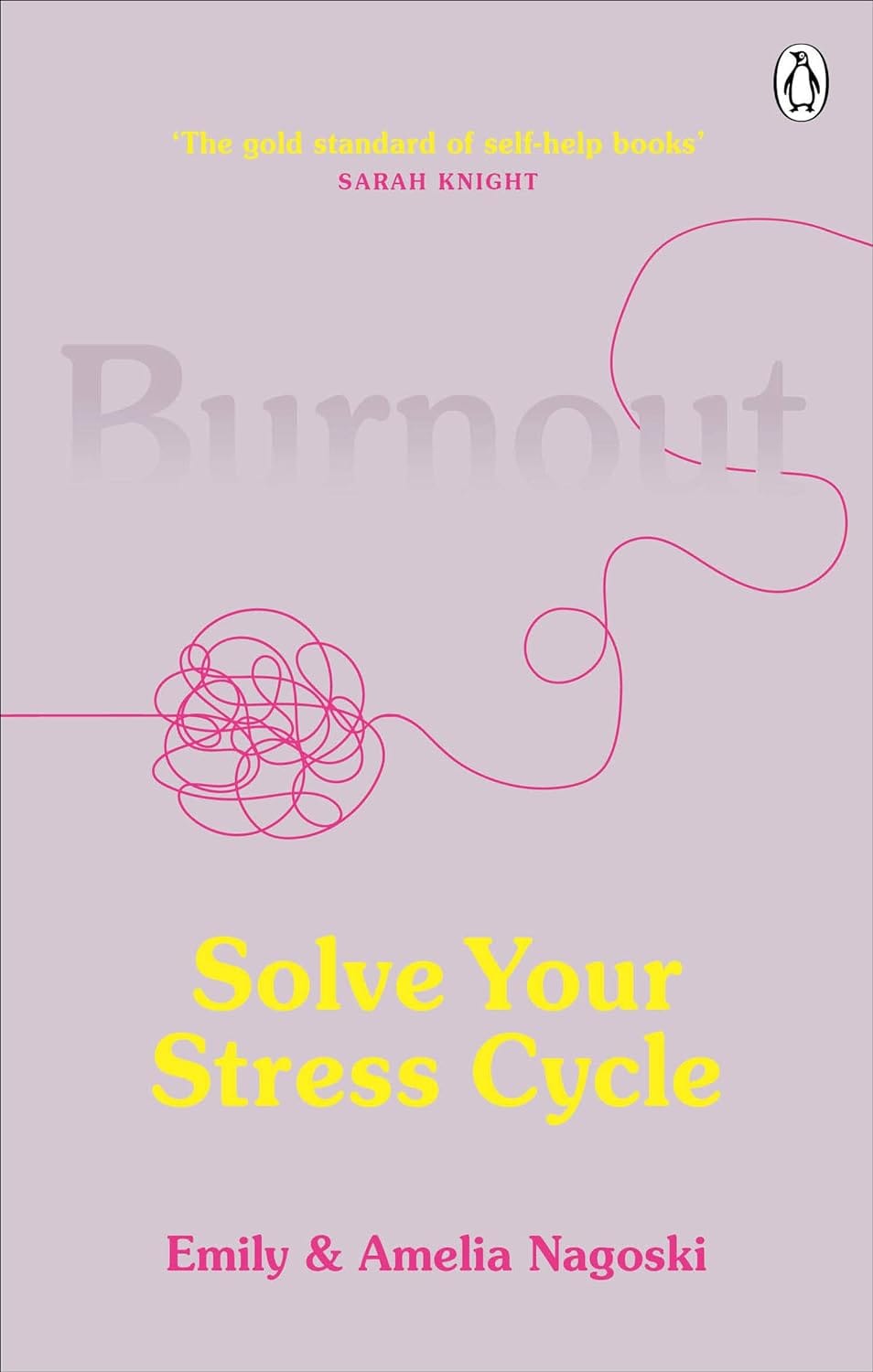
The only book on this list with burnout in its title, and the one closest to stress physiology. Its central idea is that dealing with the cause of stress is not the same as dealing with the stress itself: according to the publisher’s description, readers learn “what you can do to complete the biological stress cycle”, and the book covers rest and human connection. Emily Nagoski “earned an MS in counseling and a PhD in health behavior, both from Indiana University”, per the same page. It is written mainly for women and spends time on the social pressures women face, which some readers will find central and others less relevant.
2. “Rest: Why You Get More Done When You Work Less” by Alex Soojung-Kim Pang
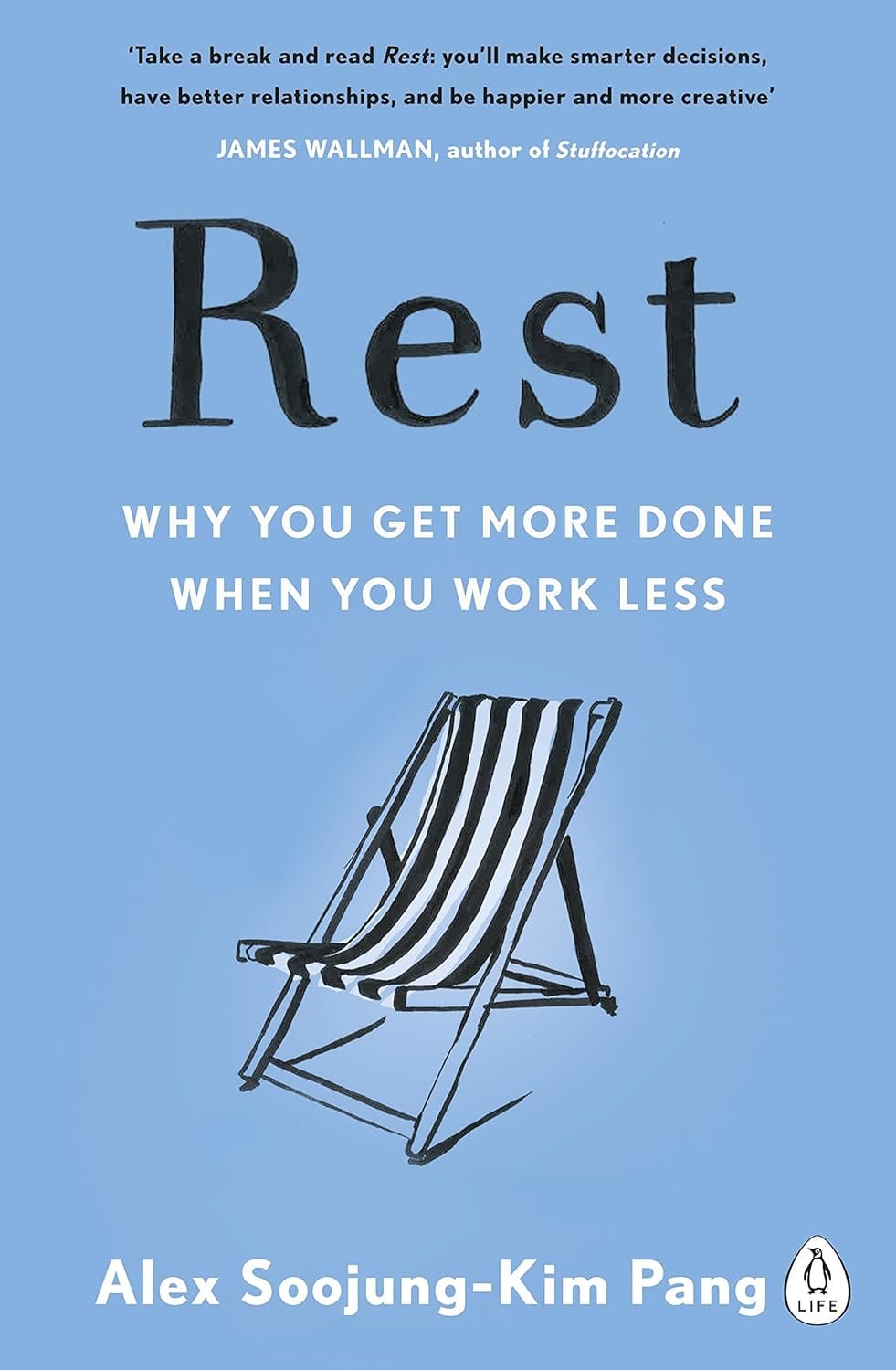
Where the Nagoskis focus on stress, Pang focuses on rest as something you plan rather than something left over. He is not a clinician: his publisher’s author page describes him as “A professional futurist with a PhD in the history of science” and a visiting scholar at Stanford and Oxford universities, so expect history and argument rather than a treatment plan. It suits people whose exhaustion comes from never really stopping. Ogeh Ezeonu, a product designer in Lagos, named Rest among her favourite books and said of her picks: “They all offer different perspectives on different mindsets when building or creating anything.” (Ogeh’s workspace interview)
3. “Thrive” by Arianna Huffington
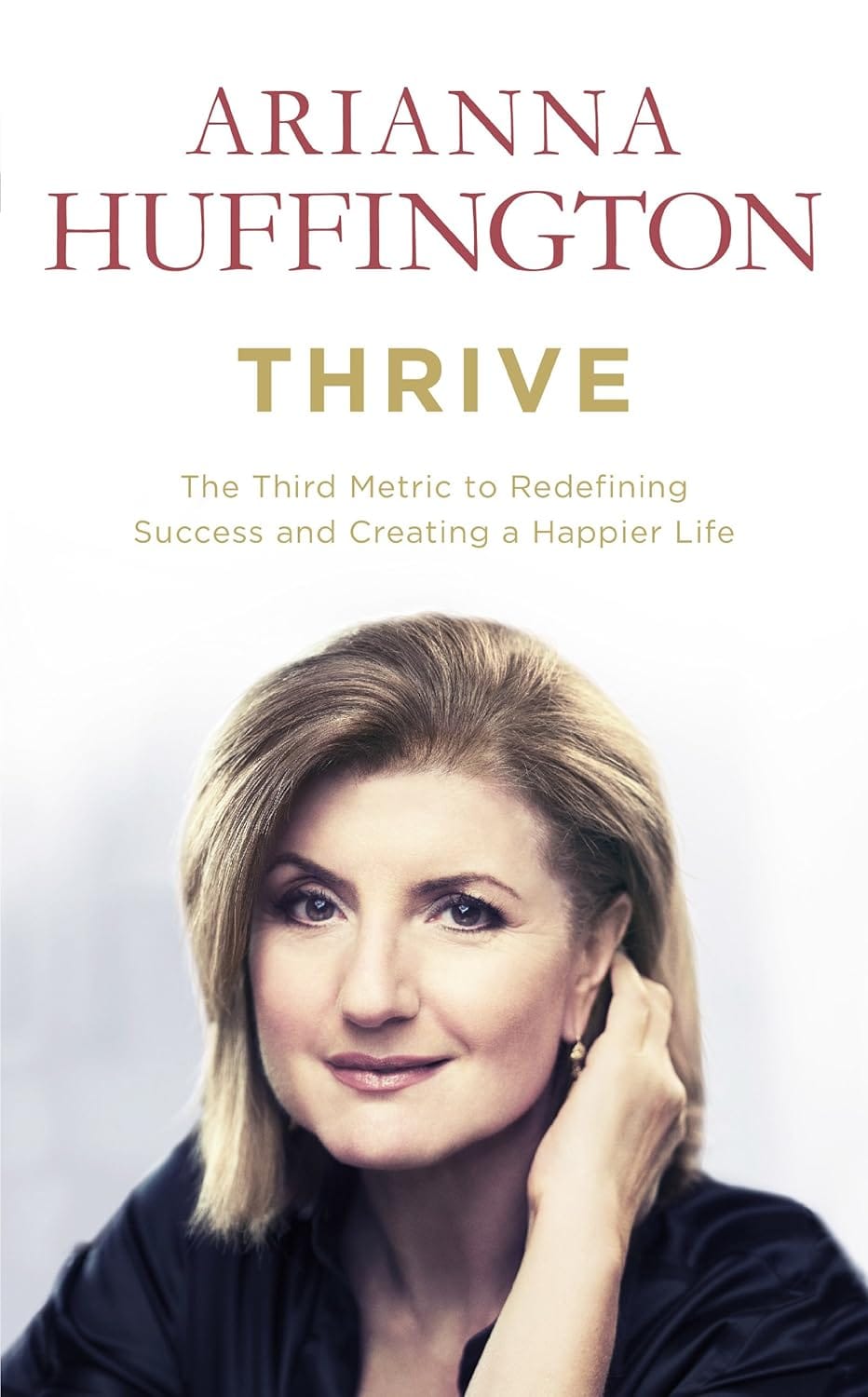
A first-person case rather than research. The publisher’s description says Huffington’s “personal wake-up call came in the form of a broken cheekbone and a nasty gash over her eye—the result of a fall brought on by exhaustion”, at a time when she was running the Huffington Post Media Group. The book argues for measuring success by well-being as well as money and status. It is written from a founder’s point of view, so it fits best if your exhaustion comes from your own expectations of yourself rather than a workload someone else sets.
If stress and difficult thoughts are taking over
Burnout and anxiety or low mood can overlap, but they are not the same thing: Maslach and Leiter’s review reports research finding burnout job-related and situation-specific, whereas depression is more general. These three books are about your relationship with stress and painful thoughts in general. Two are by working clinicians; the third is a memoir.
4. “The Happiness Trap” by Russ Harris
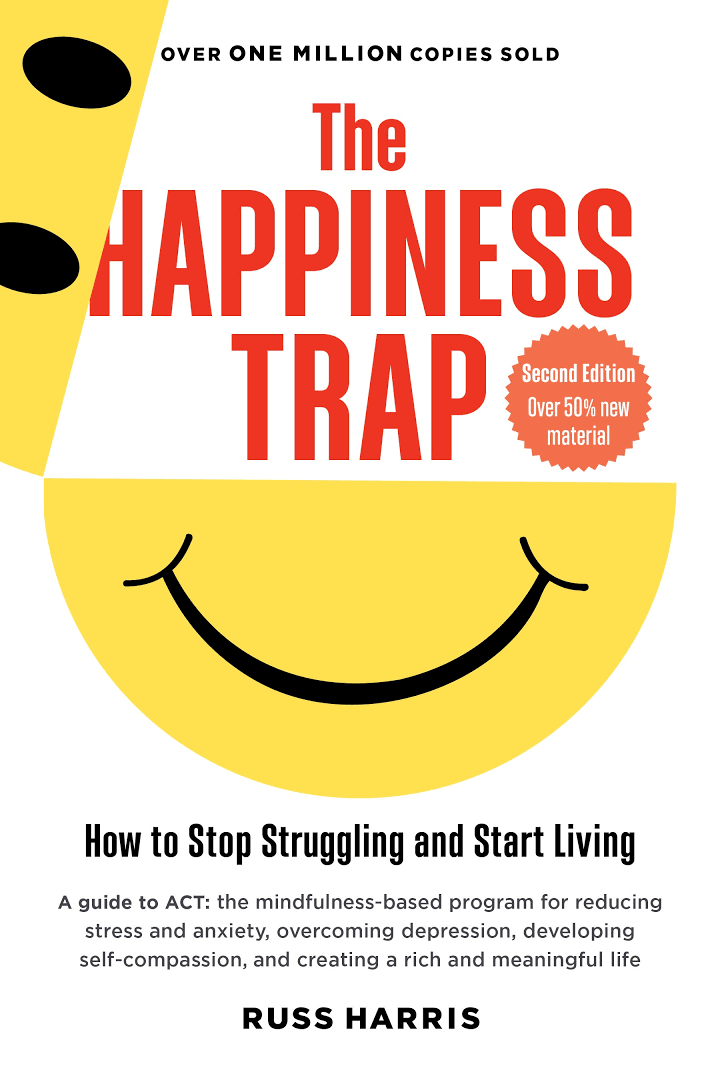
A self-help introduction to acceptance and commitment therapy (ACT). Harris is a doctor who retrained as a therapist; his own site describes him as “an internationally-renowned ACT trainer” whose “background is in medicine”. The book does not tackle workload; it teaches skills for living with stress and painful thoughts without being run by them. That makes it a reasonable pick when exhaustion has turned into constant worry or self-criticism.
5. “How to Stay Human in a F*cked Up World” by Tim Desmond
Mindfulness from a practising therapist. Desmond’s own site describes him as “a psychotherapist, Buddhist scholar, and best-selling author” and “a longtime student of Thich Nhat Hanh”, and sums the book up as “Mindfulness for staying sane and kind when the world is neither.” Choose it if you want practices for staying steady under pressure; skip it if you want strategies for changing the job itself.
6. “First, We Make the Beast Beautiful” by Sarah Wilson
A journalist’s account of living with anxiety. Wilson’s about page says she “is an experienced journalist and broadcaster” and was previously editor of Cosmopolitan Australia. This is a book about anxiety rather than burnout, written from experience rather than clinical training. It belongs here for readers who recognise that their tiredness is tangled up with anxiety, and who want company and perspective more than a method.
If the work has lost its meaning, or there is simply too much of it
Cynicism is the second WHO dimension, and Maslach and Leiter connect it to community and values. Workload is the first of their six areas. Two people on this site describe what that looks like at home. Graham Pinkerton, a graphic designer in Ontario, admits: “If I know I have to finish something for a deadline, I will just keep going until it’s done.” His fix: “I think giving yourself a schedule is probably the best thing you can do to prevent burnout and avoid feeling overworked.” (Graham’s workspace interview) Pantufla Cuántica, a product designer in Buenos Aires, names a home-specific trap: “staying off household chores while you’re working is crucial to avoiding burnout.” (Pantufla’s workspace interview)
7. “Feel-Good Productivity” by Ali Abdaal
A productivity book whose argument is that work you enjoy is work you sustain. The publisher’s page says it introduces “the three ‘energisers’ that make work invigorating rather than draining – Power, Play and People”, and that Abdaal started his YouTube channel “While working as a doctor in the UK’s National Health Service”. It fits the cynicism dimension best: if the work still has to be done but has gone grey, this is about getting some of the pull back. Its focus is re-energising work, not stopping; if you are already depleted, start with the exhaustion section above.
8. “The Joy of Missing Out” by Tanya Dalton
About workload you set yourself: deciding what not to do. On her about page Dalton writes that she spent decades “wearing myself out simply because I thought overwhelm was simply the state in which I was supposed to live”, and her bio notes The Joy of Missing Out was named a Top 10 Business Book of the Year by Fortune Magazine. She writes as a productivity author and speaker, not a researcher, and mainly for women. Choose it if your to-do list is the problem; it will help less if the demands come from an employer you cannot push back on.
If you manage people, or the problem is the workplace
Most of Maslach and Leiter’s six areas (control, reward, fairness, community) are set by the organisation, not the individual. These two books are not about burnout directly. They are for managers who can change some of those conditions for a team, including a remote one. Kei Yoshikawa, a development manager in Metro Manila, gives the individual side of the same boundary: “Turn off notifications for your work-related apps during off-hours and resist the urge to check that app.” (Kei’s workspace interview)
9. “Dare to Lead” by Brené Brown
Leadership as courage and honest conversation. Brown describes herself on her about page as “a research professor at the University of Houston” who has spent two decades “studying courage, vulnerability, shame, and empathy”, and says she spends most of her time “helping develop braver leaders and more courageous cultures.” For burnout, its relevance is to the community and fairness side of work. Of limited use if you do not lead anyone.
10. “Radical Candor” by Kim Scott
A management book about giving and asking for direct feedback. Scott’s bio says she “was a member of the faculty at Apple University and before that led AdSense, YouTube, and DoubleClick teams at Google”. Maslach and Leiter link a sense of efficacy to recognition from colleagues and leaders, which is the territory this book covers. It is a practitioner’s book, not research, and is most useful if you run a team.
When a book is not enough
If you are in the UK, the NHS’s guidance on stress says to see a GP if you’re struggling to cope with stress or the things you’re trying yourself are not helping. In England, adults can refer themselves to NHS talking therapies without going through a GP. For help that is urgent but not an emergency, call NHS 111; if you or someone you know needs immediate help, or has seriously harmed themselves, call 999 or go to A&E. Outside the UK, your own doctor or local health service is the place to start.
More book lists for people who work from home:
- How to improve your productivity
- How to avoid distractions
- How to manage your time
- How to boost your creativity
- How to maintain a work-life balance
- How to keep your mental health in check
- How to develop essential skills for WFH
- How to balance family and work responsibilities
- How to deal with loneliness when working remotely
We’re a reader-supported publication. This article has affiliate links, so if you click and buy something we recommend, we might get a commission. Just so you know, we wrote this article independently.
