

A cottagecore desk setup leans on vintage wood, plants, and warm light. The trouble is, a lot of these setups photograph well and then fall apart the moment you actually try to work eight hours at them.
This guide keeps the look you want and fixes the parts that usually get ignored, like posture, cable mess, and lighting that doesn’t fry your eyes by 3pm.
Start With a Desk That Holds the Cottagecore Look
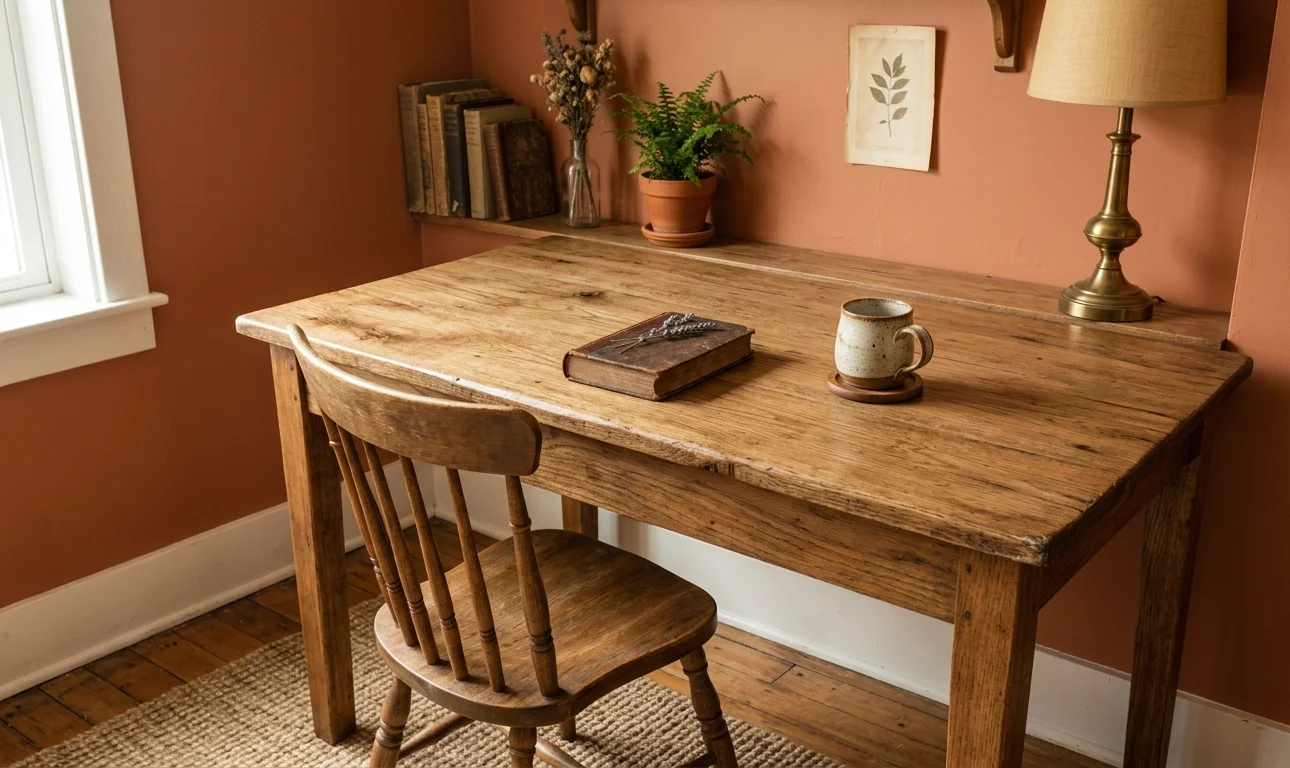
A secondhand wooden desk does most of the heavy lifting. Look for solid oak or pine with a distressed finish, or a writing desk with a couple of small drawers. Distressed paint and worn edges read as cottagecore far better than anything glossy.
One catch worth checking before you buy: height. Older desks often sit lower than the 28 to 30 inches that suits typing. If your forearms angle down to reach the keyboard, your shoulders pay for it.
A vintage desk with the right height beats a prettier one that wrecks your wrists. The real home office setups featured here show how makers solve this without losing the aesthetic.
Cottagecore Desk Accessories Worth Keeping
Accessories carry the mood, but the useful ones earn their spot twice. Handmade ceramic cups hold pens. Wicker trays corral loose cables and chargers. A small brass or wooden lamp gives you task light without looking like office equipment.
Skip plastic organizers and acrylic anything. They break the look instantly. Stacked cloth-bound books raise a monitor or laptop a few inches, which doubles as a cheap stand. If you want curated ideas for tiny surfaces, this roundup of accessories for small workspaces mixes warm materials with hidden storage.
Where Cottagecore Setups Usually Fail: Ergonomics
Here’s the part most desk tours leave out. A monitor sitting flat on a low vintage desk forces your neck to drop, and over weeks that turns into stiffness. Raise the top of your screen to roughly eye level. A stack of books works, or a wooden riser if you want it tidy.
Keyboard and mouse should sit close enough that your elbows stay near 90 degrees. A cushioned wooden chair fits the theme, but add lumbar support behind your back if you sit for long stretches. For the full screen-and-laptop layout, this guide to positioning a monitor and laptop covers the spacing in detail.
Lighting That Stays Cozy and Still Works
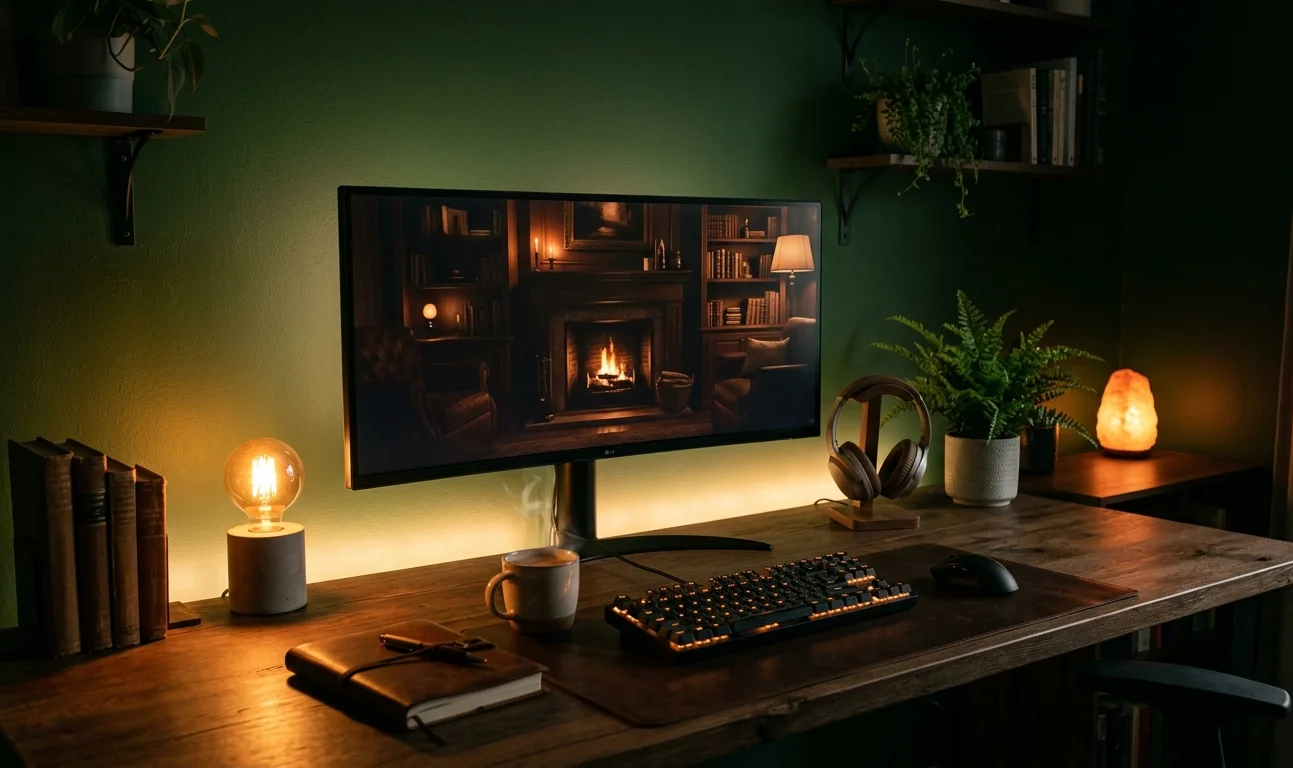
Cottagecore loves warm, dim light. Screen work needs the opposite. The fix is layering. Keep a warm-toned lamp for ambiance, then add a focused task light for the keyboard and any handwriting.
A small clip lamp or a low-profile light bar fills the gap without ruining the vibe. Warm bulbs around 2700K feel cottage-like; a neutral 4000K task source keeps you alert. Position the task light opposite your writing hand to kill shadows. These desk lamp picks for home offices include warm options that suit the style.
Plants and Greenery Without the Upkeep
Plants are non-negotiable for this aesthetic, but a dead fern looks worse than no plant at all. Pick low-light, low-water options: pothos, snake plant, or a small succulent. Dried flowers in a vintage jar give you the look with zero maintenance.
Group two or three pots at varied heights instead of lining them up. A trailing plant on a shelf above the desk frames the space and pulls the eye up. For more ideas on fitting greenery into a tight corner, this small-space home office walkthrough handles plants and layout together.
Hide the Tech, Keep the Function
Modern gear and cottagecore don’t mix on sight, so the goal is concealment, not removal. Route cables behind the desk with adhesive clips and a small tray underneath. A wicker basket on the floor hides a power strip and any bulky adapters.
Wireless keyboards and mice cut visible clutter fast. Drape a linen runner over part of the desk to soften the surface and break up hard tech lines. One maker’s year-long approach to cable management shows how much cleaner a setup reads once the wires disappear.
What a Cottagecore Desk Build Actually Costs
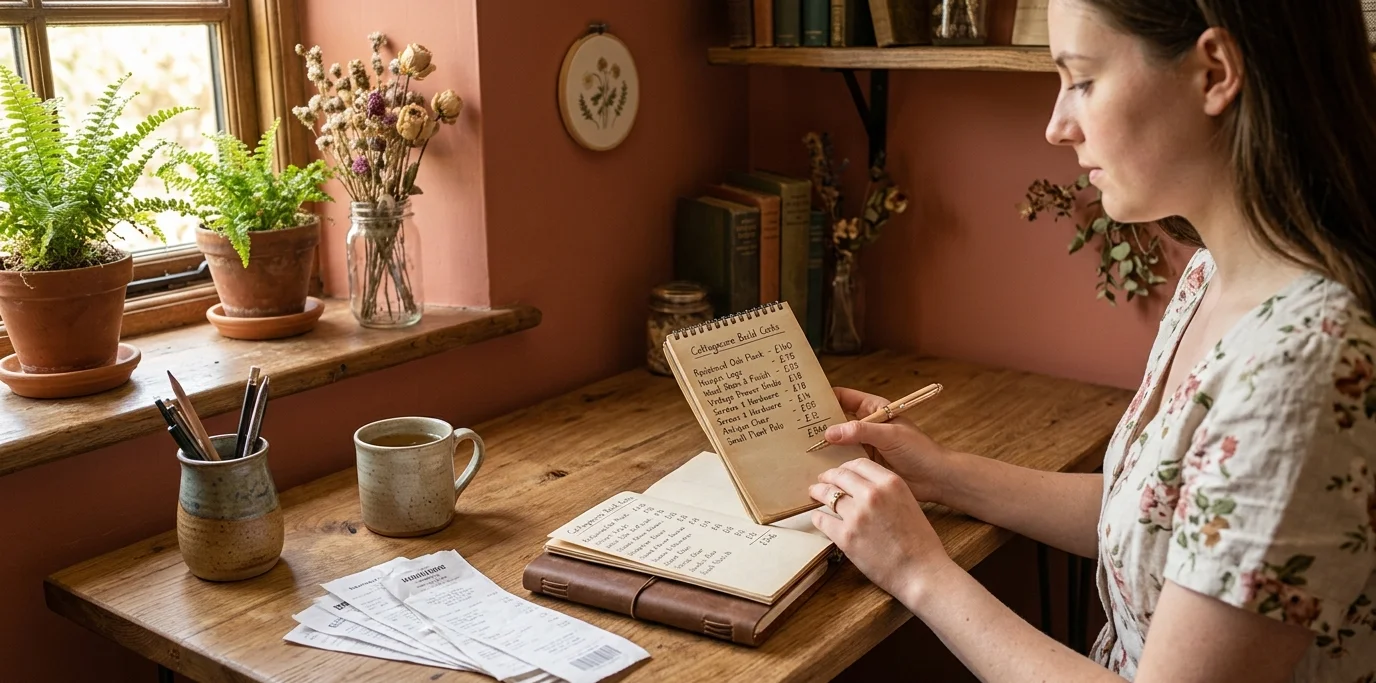
Budget shifts depending on whether you thrift or buy new. Thrifting the desk and chair drops the total sharply, since those are the two biggest line items. The chart below shows a rough split for a mostly-secondhand build around $300.
You can go lower. Plenty of these budget desk setups from real makers come together under $150 with thrift finds and DIY fixes, and a few of the minimal setups here show how to keep things warm without buying much at all.
FAQs
What do I need for a cottagecore desk setup?
Start with a vintage wooden desk, a cushioned chair, a warm lamp, low-maintenance plants, and natural storage like wicker baskets. Add handmade pottery and dried flowers, then hide cables to keep the look clean.
How do I make a cottagecore desk ergonomic?
Raise your monitor to eye level using books or a wooden riser. Keep your keyboard close so elbows stay near 90 degrees, and add lumbar support to a cushioned chair for long sessions.
What plants work best for a cottagecore desk?
Pothos, snake plants, and small succulents handle low light and infrequent watering. Dried flowers in a vintage jar give the same cottagecore feel with no upkeep at all.
Can a cottagecore desk setup work for gaming or coding?
Yes. Conceal the tech with cable clips, a wicker basket for the power strip, and wireless peripherals. Keep ergonomic basics intact, and the warm decor sits over a fully functional workstation.
How much does a cottagecore desk setup cost?
A mostly-secondhand build runs around $300, with the desk and chair taking most of it. Thrifting both can drop the total under $150, leaving room for lighting and plants.

Francesco is a maker, engineer, and 3D printing enthusiast passionate about building tools and spaces that inspire creativity. With a background in software development and hands-on hardware projects, he explores the intersection of digital fabrication, productivity, and modern workspaces. When he’s not designing or experimenting, Francesco shares insights to help others create smarter, more efficient environments for work and making.