

At 8.45 on a busy Tuesday, the desks nearest the windows fill first. One employee pulls a chair in close to a second screen. Another rolls back to take a call. When a visitor arrives, somebody wheels over a spare chair from the quiet end of the room.
By five o’clock, one strip of flooring has had a busier day than half the office.
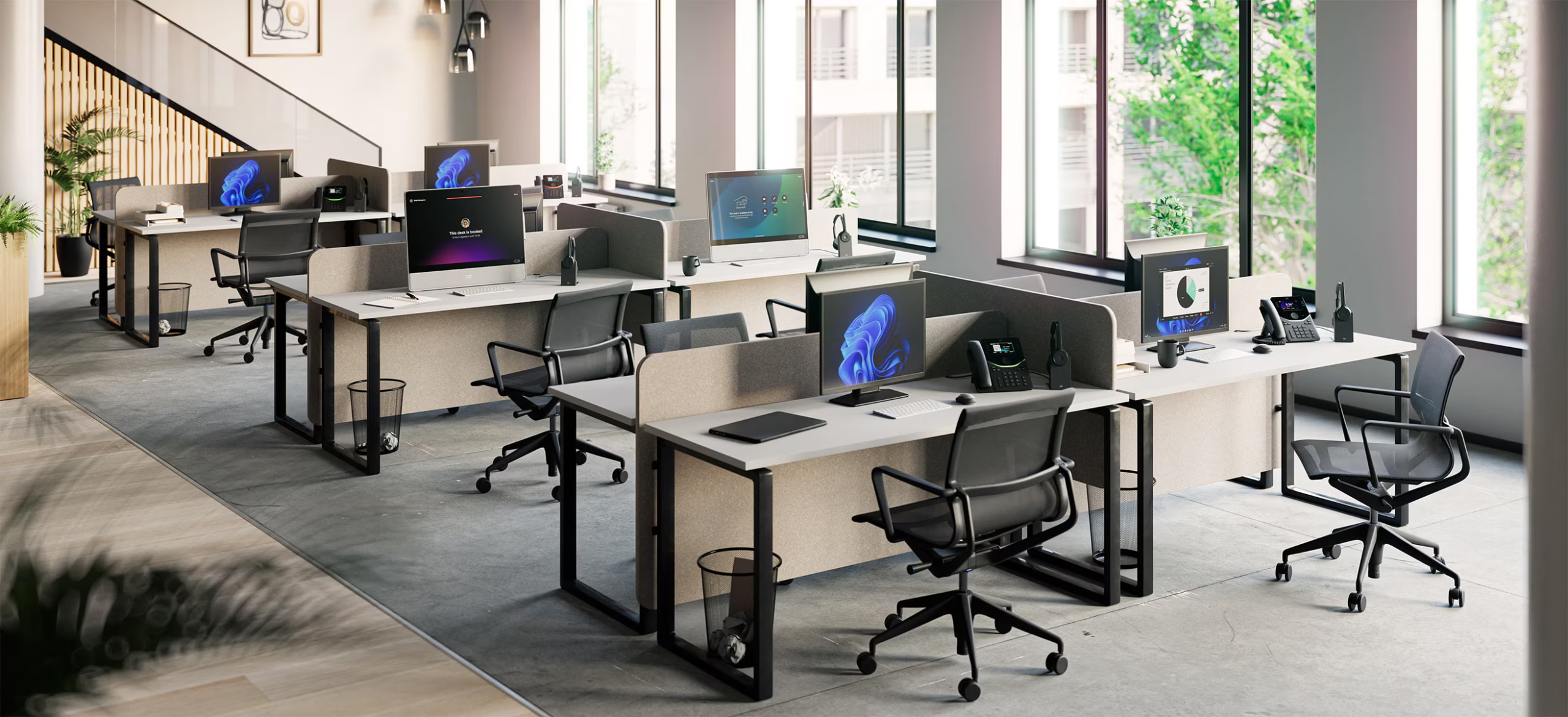
The desk-booking system records who checked in. The floor records something else: every short roll, sharp turn and caster dragged sideways because it stopped moving properly.
Hot-desking is sold in numbers. Fewer fixed desks, better use of office space and
more flexibility for hybrid teams all fit neatly into a spreadsheet. The patch of carpet beneath each chair does not.
The busiest desks leave a pattern
A half-empty office can still have heavily used flooring. An empty Wednesday does not undo the traffic of a crowded Tuesday.
People favour certain workstations. The desk is near a window, close to the kitchen, beside colleagues or positioned away from a noisy walkway. Whatever the reason, the same part of the office fills first while other desks remain untouched.
Over time, those choices become visible. Carpet flattens around the popular seats. Scuff marks collect beside desks on hard floors. Chair wheels cross one laminate seam again and again.
The pattern may be subtle until the office layout changes. Move a desk and a worn arc appears where the chair travelled. Lift a storage pedestal and the protected carpet underneath looks several shades brighter than the area around it.
A workstation booked three days a week may receive more chair movement than a permanently assigned desk used five days a week, simply because each person sits, adjusts and moves differently.
Follow the mark back to the chair
A rolling office chair transfers weight through several small casters. When those wheels turn freely, the movement feels effortless. Once one becomes clogged or damaged, the chair starts to slide, judder or pull to one side.
The person sitting there gives the chair a firmer push, finishes the email and moves to another desk tomorrow. The next user encounters the same judder and assumes that is simply how the chair feels.
Dust, grit and small pieces of debris collect around office chair wheels. Hair and carpet fibres wrap around the axles. Near an entrance, dirt carried in on wet shoes finds its way beneath the casters and travels back and forth over the surface.
Hard plastic or nylon wheels can be unforgiving on hardwood and laminate once they stop rolling cleanly. Instead of gliding, a damaged caster drags at an angle and leaves a faint line in its path.
Shared office furniture makes this easier to miss. At an assigned desk, one person experiences the problem repeatedly and eventually reports it. At a hot desk, responsibility resets whenever the seat changes hands.
A cleaner sees the debris after everyone has left. An employee feels the wheel catching during the day. Facilities staff see the worn flooring months later. Until those observations meet, the cause remains under the desk.
Carpet flattens. Hard floors mark.
On carpet, the pile compresses along the route between the desk and the point where someone stands up. High-pile carpet increases rolling resistance, while repeated movement wears the fibres and leaves a track that vacuuming no longer lifts.
Carpet tiles make local repairs possible, although replacing one is not always invisible. A facilities manager retrieves a spare tile from the stockroom and discovers that it looks noticeably darker than the carpet exposed to four years of office lighting and foot traffic. The repair works, but everybody can see it.
Hardwood develops scratches, scuff marks and dull patches as the finish wears. Laminate may show similar damage around the surface and joints. Vinyl can develop indentations or a polished-looking route where an office chair has travelled for months.
Hard-floor damage often hides in plain sight. Looking directly down, the surface appears fine. Move the chair and let daylight cross the room, and the scratches suddenly have edges.

Protection has to follow the chair
Before ordering anything, turn the chair over.
The wheels should rotate freely, without cracks, sharp edges or compacted material around the axle. Hair and dust can be removed during office cleaning. Damaged casters need replacing, and the wheel material should suit the flooring beneath it.
Desks near entrances, kitchens and busy walkways deserve closer attention. Think of a wet Monday morning when grit arrives on shoes and spreads across the office before coats have even dried. Wheels in these areas pick up more debris than those in a quiet corner.
Floor protectors add another barrier, but coverage matters. Choose office chair mats according to the flooring, carpet pile and route covered by the chair.
A carpet mat commonly uses a gripped underside, with the grip depth matched to the pile. Hard floors need suitable slip resistance without a backing that marks the finish. Whichever surface sits beneath it, the mat should remain flat and stable.
Size is where a sensible purchase goes wrong. The mat fits neatly beneath the desk, yet its back edge stops just short of the point where people stand.
Each time somebody pushes away, the rear casters cross onto unprotected flooring. Before long, the wear begins precisely where the mat ends.
PVC, polycarbonate and tempered glass mats offer different levels of weight, rigidity and visibility. Material matters, although a stable mat that covers the full chair path will serve the workstation better than one chosen by appearance alone.
The bill appears when the furniture disappears
Floor damage stays easy to ignore while desks, bins and storage units cover it.
Then comes an office refurbishment. A team lifts a bank of desks and finds arcs of flattened carpet beneath an entire row. What looked like one tired workstation becomes a larger flooring job.
Repairs may involve dismantling furniture, disconnecting cables and moving employees elsewhere. Carpet tiles need matching.
Hardwood scratches can require a wider area to be refinished. Sections of laminate or vinyl may have to be lifted rather than patched.
The damage looks more serious during a relocation or lease inspection. An empty office gives the floor nowhere to hide, and a landlord walking through the space sees every worn route previously covered by chairs.
Even before the repair bill arrives, those marks change how the workplace feels. Visitors will not study the area under an individual desk setup, but worn patches across a room make the whole office appear older and less cared for.
A late-afternoon walk through the busiest part of the office will reveal more than another report. Watch how far each chair travels. Listen for a wheel that catches. Look at the carpet around popular desks and the light falling across hard floors.
If that inspection uncovers damaged mats, chairs or other shared equipment, add the replacements to the next supply order before the surrounding flooring suffers further wear.
Hot-desking may reduce the number of fixed workstations a business needs. That saving becomes less convincing when the busiest sections of flooring require premature replacement.
The floor does not appear in the booking system, but it keeps score.
