

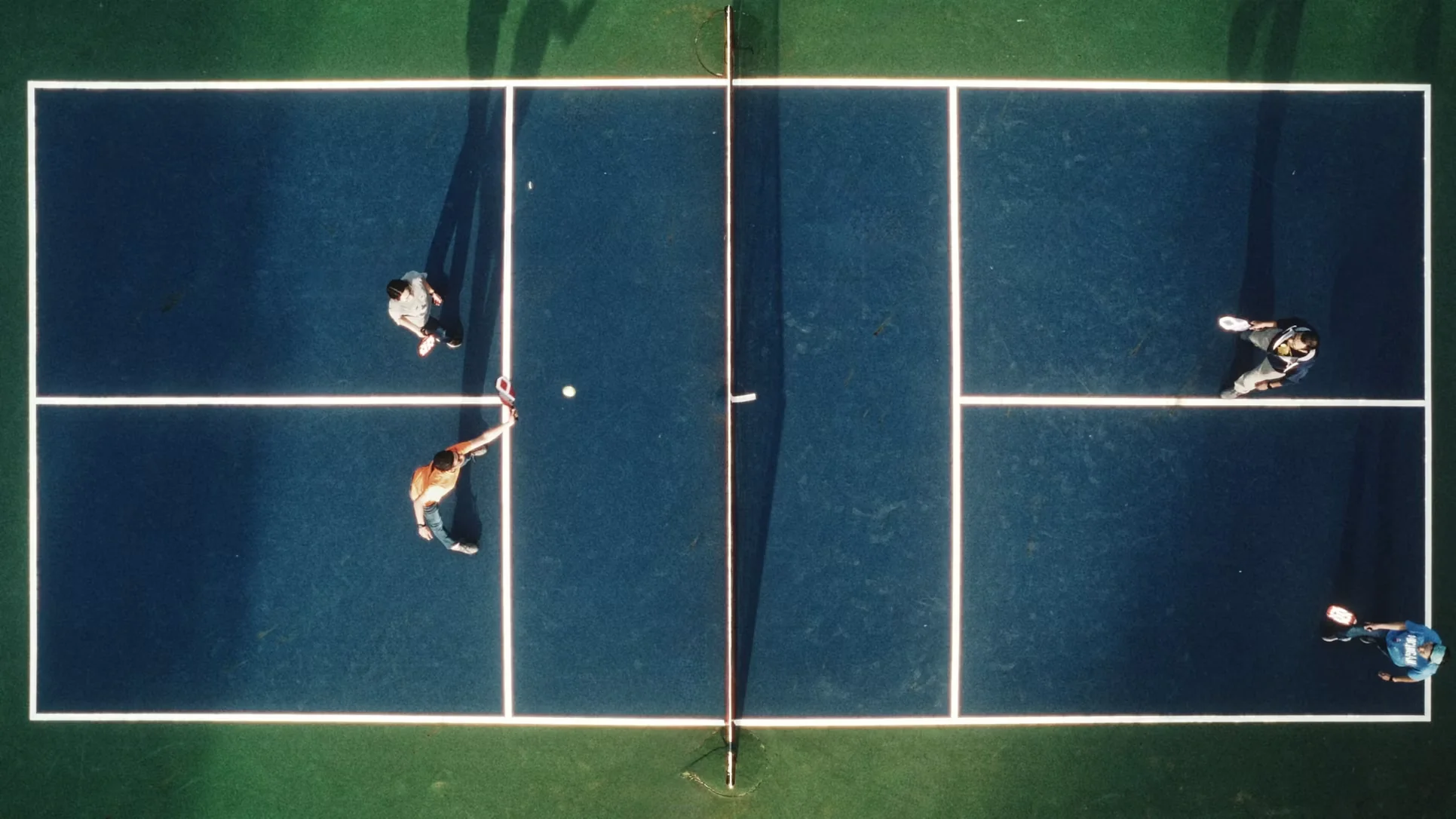
Tennis exposes the mind because there is nowhere to hide after a mistake. A double fault ends the point, and within moments the player has to begin the next one.
A missed break point cannot be handed to a teammate for repair. The next rally still belongs to the same player.
That is why the tennis mental game is not simply about “wanting it more.” It involves attention, emotional regulation, shot tolerance and routines that stop one bad point from contaminating the next five.
Technique creates options. Self control determines how many of those options remain available when the score becomes uncomfortable.
The Next Point Starts Before the Next Serve
Watch experienced players between rallies and a pattern appears. Many turn away from the previous point, adjust strings, walk to a familiar position, settle their breathing and begin the next service or return routine.
The details vary. The function is separation. A repeatable sequence gives the previous point somewhere to end before the player starts solving the next problem.
The routine does not erase frustration. It limits how long frustration gets to make decisions.
Patience Is an Attacking Skill in Disguise
Patience is often mistaken for merely keeping the ball in play. At a good level, it means refusing the wrong opportunity.
A player may have enough power to attack a neutral ball and still choose not to because the geometry is poor, the body is off balance or the opponent has already recovered. One extra controlled shot can create a much better opening.
The opposite pattern is familiar: lose two long rallies, then try to finish every exchange in three strokes. Impatience changes shot selection before it changes the score.
Attention Works Better When the Cue Has a Job
A 2024 systematic review of nine racket-sport studies found that external-focus instructions generally benefited learning and performance compared with internal-focus or control conditions, especially among novice and lower-skilled athletes.
The evidence is useful, although broader motor-learning research published later in 2024 has also questioned how large and universal the external-focus advantage really is.
The practical lesson is not to ban technical thoughts. It is to avoid carrying five mechanical instructions into a pressure point. “Send the ball high and deep to the backhand” gives attention a clear external target; consciously checking elbow, wrist, shoulder, hips and feet at once creates more traffic.
Practice is where technical detail can expand. Competition usually demands a shorter cue.
Anxiety Can Cost Efficiency Before It Costs Accuracy
Research with skilled and less-skilled tennis players has shown that higher anxiety can reduce processing efficiency during anticipation tasks even when response accuracy does not significantly decline. The player may still make the correct read, but the decision requires more mental effort.
That explains why a tight match can feel exhausting before the score shows obvious deterioration. Attention becomes expensive. Routine choices start asking for conscious supervision.
The useful response is not to demand “more focus” in the abstract. Give attention one task: the opponent’s toss, the return position, the height over the net or the recovery spot.
The Same Discipline Appears on a Much Smaller Table
Racket sports differ sharply in speed, dimensions and technique, yet anticipation and emotional reset remain familiar themes. A table tennis game compresses those decisions into 11-point games, so a few poor receives can alter the score before a player has much time to recover.
Bettors reading table tennis bet tips should therefore separate tactical evidence from the temptation to chase a player simply because several points have just gone the same way.
MelBet currently lists match-winner, handicap and total-points markets for table tennis, and each expresses a different view of the matchup rather than a generic prediction of “who is better.” A fixed stake is especially useful when the scoring format makes the market move quickly.
The sports are not interchangeable. The shared lesson is narrower: short memory, clear cues and decisions that survive pressure.
Betting Discipline Has Its Own Reset Routine
The mental habits admired on a tennis court have an obvious parallel in sports betting. A previous win does not make an unrelated prediction stronger, and a previous loss does not improve the value of the next price.
Set the analytical threshold before the market becomes emotional. Decide which odds would make the bet worthwhile, then leave it alone if the price moves below that number.
This is deliberately uneventful. Bankroll discipline usually is.
Mobile Access Removes Friction — Sometimes Too Much
A smartphone shortens the distance between an observation and a betting decision. That is useful when a lineup, score or market price genuinely changes the estimated probability, but convenience does not improve the underlying read.
Using app Melbet gives mobile access to MelBet’s sports product when a bettor is away from a desktop. The mobile platform supports pre-match and in-play betting, so an already researched position can be checked without rebuilding the entire process on another device.
Fixed staking and a written target price preserve the same self control demanded by pressure points in tennis.
Faster access should serve a decision rule. Without one, speed simply gives emotion less time to cool.
The Best Mental Routine Is Boring on Purpose
A useful pre-point routine does not need ten stages. Choose one physical reset, one breathing cue and one tactical instruction for the next point.
Keep the instruction observable: serve to the body, play higher over the net, attack the shorter ball or recover to the correct position. “Be confident” gives the brain little to execute.
The mental game of tennis becomes manageable when broad emotions are translated into small tasks. One point. One target. Then the routine starts again.
