

The era of the “heavy box”—those sprawling, three-hour epics requiring a law degree to decipher the rulebook—is hitting a major structural shift. Walk into any local game store or visit a private game night, and you will notice a trend.
People are trading plastic miniatures and intricate terrain tiles for nothing more than a deck of cards, a handful of pencils, and a pad of paper.
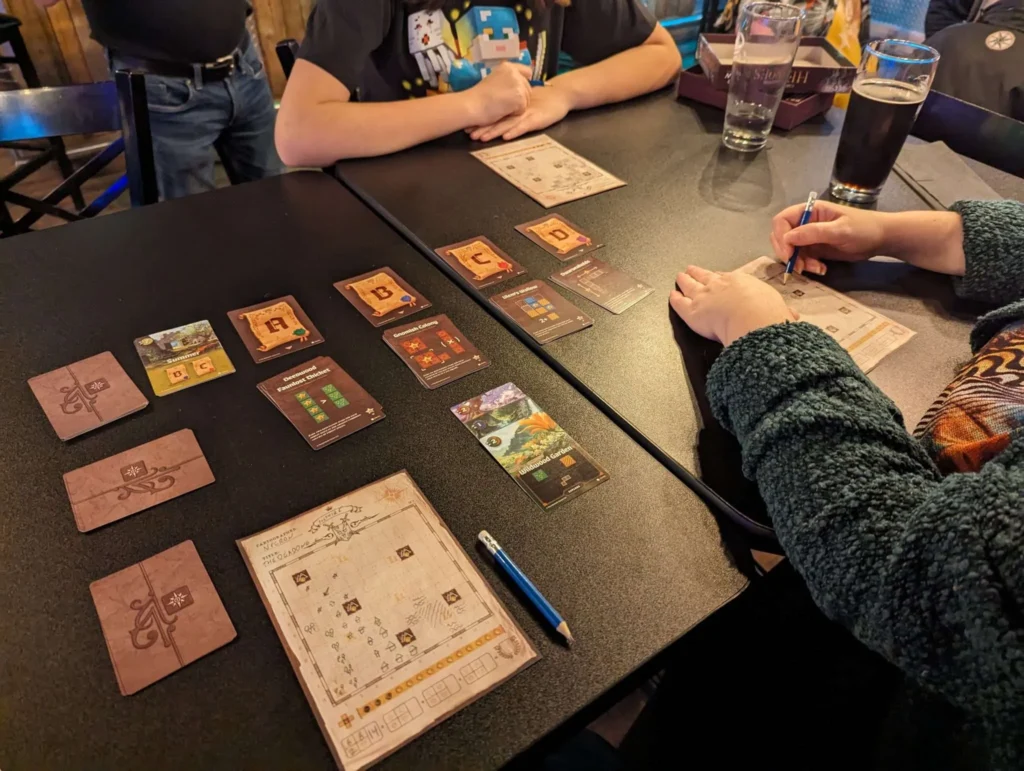
This is the rise of the flip-and-write genre, spearheaded by hits like Cartographers, which have fundamentally changed how we define the modern tabletop experience.
These games are defined by a deceptively simple loop: a card is flipped, revealing a shape or terrain type, and every player simultaneously marks their individual sheet to claim a space.
It sounds basic, but the psychological payoff is massive. These games strip away the “table hogging” components of traditional board games and replace them with a personal puzzle that is equal parts creative and ruthless.
Why the genre is dominating game nights?
The appeal of flip-and-write games isn’t just about speed; it’s about the democratization of the gaming table. Traditional board games often have a “lead player” effect, where one person’s turn dominates the table for ten minutes while everyone else watches.
The flip-and-write format obliterates that downtime entirely. Because every player acts at the same time, the game moves at the speed of the fastest player, not the complexity of the rules.
The reduction of downtime
In a typical flip-and-write session, the action happens simultaneously. When a card is revealed, you aren’t waiting for your neighbor to move a unit or negotiate a trade.
You are analyzing your own grid, weighing the risk of drawing a jagged shape, and executing your strategy. This keeps everyone engaged from the first flip to the final tally.
The satisfaction of the solved puzzle
Humans are hardwired to love “filling in” blank spaces. Whether it’s a grid on a sheet or a checklist, there is a deep, primal satisfaction in completing a pattern.
When Cartographers tasks you with filling a map, the act of coloring in those squares feels like an act of creation.
You aren’t just playing; you are building a legacy, even if that legacy is just a scrap of paper that gets recycled at the end of the night.
The psychology of micro-rewards and instant feedback
The success of these tabletop games mirrors the habits of modern interactive entertainment. Players are drawn to loops that offer fast, frequent feedback.
The anticipation of the next flip is remarkably similar to the thrill of a high-volatility spin on a reel or the quick decision-making required in live betting.
The hunger for these micro-wins is evident in how players approach all forms of recreation. Take, for example, a fan who enjoys a quick session on the HitnSpin casino Mobile App.
Players engaging with these digital experiences are often hunting for that same hit of adrenaline provided by a successful spin, the volatility of a jackpot, or the clever wagering required to manage a bankroll.
Just like mapping out a kingdom in a tabletop game, success in these high-stakes digital environments depends on quick tactical awareness, monitoring the variance of the game, and the satisfaction of watching a successful sequence of outcomes stack up in real-time.
It is the tactical decision-making—the thrill of the wager and the hope for that final, crucial winning spin—that bridges the gap between physical mapping and digital gaming.
The evolution of the player sheet
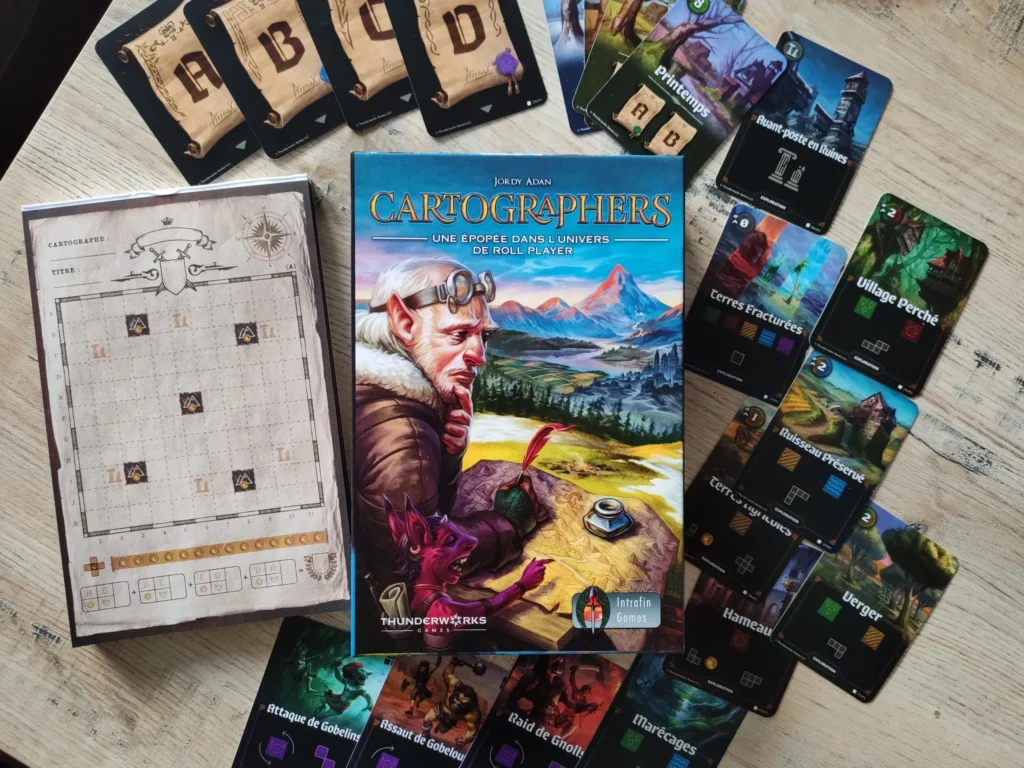
In a flip-and-write game, the player sheet isn’t just a scoreboard; it is the entire game engine. The sheet evolves from a blank slate into a complex history of your successes and failures. Designers have become incredibly clever at making these sheets feel different each time you play.
Consider the following progression of how these games have evolved to keep players coming back:
- Fixed maps. Early iterations gave everyone the same grid, meaning the puzzle was purely about optimization.
- Variable objectives. Games started introducing cards that change the scoring goals, forcing players to rethink their priorities every single session.
- Asymmetrical player powers. Modern titles now give players unique abilities, allowing for different strategies even when starting with the same blank map.
- Interactive drafting. Newer variants include a drafting phase, where you must fight over which “flip” you get to write down, adding a layer of denial to the genre.
This progression proves that simple mechanics don’t have to be shallow. By layering these features, designers ensure that the “write” phase is never the same twice.
Structural shifts in modern tabletop design
The move toward this genre signals a major shift in what hobbyists value. We are seeing a move away from “crunch” and toward “elegance.”
The barrier to entry for a game like Cartographers is nearly zero—you can teach the rules in three minutes, yet the game offers enough strategic depth to keep a seasoned gamer satisfied for years.
When you look at what makes these games stick, it usually comes down to three operational pillars:
- Low physical footprint. These games can be played on a small table, a cafe bar, or even a plane tray, making them highly portable.
- Scalability. Because there is no mechanical interaction with an opponent’s board, you can play with fifty people just as easily as you can play with one.
- Low barrier to entry. The learning curve is flattened, meaning your non-gamer friends can sit down and play immediately without feeling like they are at a disadvantage.
As we look toward the future of board game design, it is clear that flip-and-write is not a passing fad. They have carved out a permanent niche as the premier “filler” game.
We are already seeing the genre expand into more thematic territory—dungeon crawlers, city builders, and historical simulations that all use the same core mechanic but add layers of narrative on top.
