

Mobile shooters used to mean one thing: twitch-fast, fast time-to-kill, chaos. Call of Duty Mobile, Warzone Mobile, Free Fire. Fun, but not tactical.
Tactical shooters are a different breed. They test map awareness, team comms, gear choices, patience. The kind of game where the player who set up an angle 30 seconds before the engagement wins, and the one who rushed through the doorway dies.
If you grew up on Counter-Strike, Rainbow Six, Tarkov or the old Operation Flashpoint, you know the difference in a single round.
We tested every entry on this list across the first five months of 2026, with a particular focus on the new wave of mobile tactical shooters that have arrived in the last year. Rainbow Six Mobile launched globally on February 23.
Arena Breakout has matured into a Tarkov-grade experience. Delta Force Mobile dropped in April 2025 and immediately set a new bar for large-scale combat on a phone. The bench is the deepest it’s ever been, and these are the seven worth your time.
Quick-pick summary
| Game | Best for | Verdict | Price | Platforms |
|---|---|---|---|---|
| Rainbow Six Mobile | Operator-and-gadget tactical FPS | The deepest tactical FPS on mobile | F2P, $4.99 Premium Pass | iOS, Android |
| Arena Breakout | Hardcore extraction shooter fans | Tarkov on your phone, if you survive the curve | F2P, $0.99–$3.99/mo passes | iOS, Android |
| Mech Arena | Tactical mech PvP enthusiasts | Slow, weighty, methodical 5v5 mech combat | F2P, cosmetic IAPs | iOS, Android, PC |
| Delta Force Mobile | Battlefield-scale combined arms | Most polished large-scale tactical shooter on mobile | F2P, cosmetic IAPs | iOS, Android, PC, PS5, Xbox |
| Standoff 2 | Counter-Strike veterans on mobile | The closest thing to CS:GO pacing on a phone | F2P, case/skin IAPs | iOS, Android |
| Critical Ops | CS purists who want fewer frills | Tactical 5v5 stripped to its bones | F2P, skin IAPs | iOS, Android |
| Bullet Echo | Players wanting something completely different | Top-down tactical stealth like nothing else | F2P, hero/skin IAPs | iOS, Android |
How we evaluated each game?
We considered 14 mobile shooters before narrowing the list to the seven below. The other seven were either too twitch-focused to count as tactical (Call of Duty Mobile, Warzone Mobile, Free Fire), too underbaked at the time of testing (Marvel Rivals Mobile, T3 Arena), or just niche enough that recommending them broadly didn’t make sense (Sausage Man, Blood Strike).
For each game on the final list, we played a minimum of 20 hours across PvP modes, used both touch and controller input where available, and tracked five things: how much positioning actually matters versus pure reaction speed, how meaningful gear and loadout decisions are, the quality of audio cues, the strength of team-comp considerations, and how the F2P progression feels for a player who isn’t spending. The order below reflects how each game performed across all five.
1. Rainbow Six Mobile
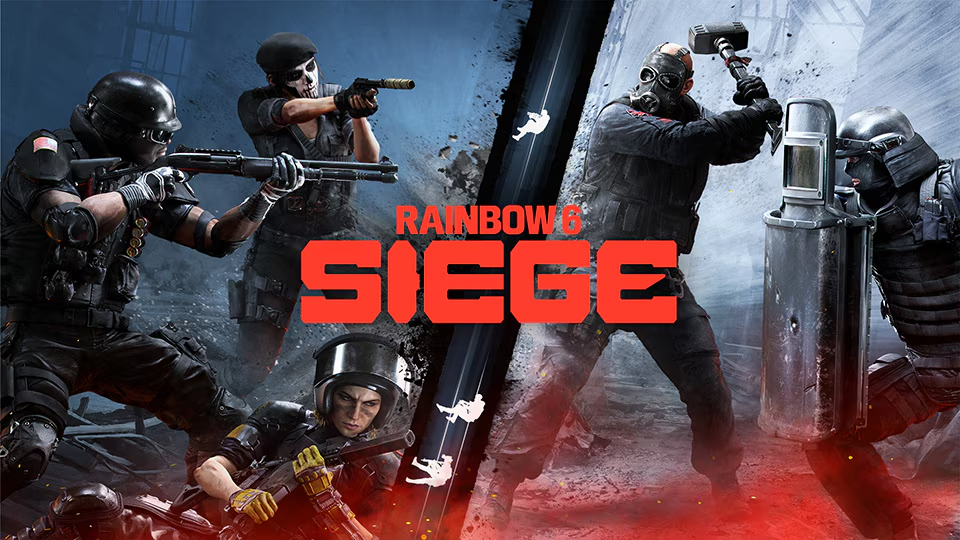
Verdict
The deepest tactical FPS on mobile, and it’s not particularly close after the global February 2026 launch.
Who it’s best for?
Anyone who put hundreds of hours into Rainbow Six Siege on PC or console and wants the same operator-and-gadget chess match in their pocket. Also any tactical FPS player who is more interested in pre-engagement decision-making than mechanical aim.
What stands out?
Rounds get decided before the shooting starts. The first 30 seconds of attack are drone routes, denial callouts, and reading where defenders are reinforcing.
By the time the breach lands, half the work is done, or you’ve lost half the work before the breach happened and you’re scrambling. That kind of pre-engagement decision tree doesn’t exist anywhere else on mobile.
The 20+ launch operators include most of the Siege core roster (Thatcher, Bandit, Mira, Smoke), and the maps are faithful adaptations of Bank, Clubhouse, Border, Oregon and Villa, plus two mobile-exclusives in Restaurant and Summit. Controller support is mature from day one.
The honest downside
Touch controls are workable for casual play but a real handicap in ranked. If you don’t have a Backbone or Razer Kishi, the higher MMR brackets are going to feel unfair against the players who do.
The matchmaking also has the same growing-pains issue every freshly-launched competitive shooter has at this stage. Expect some lopsided lobbies in your first month.
Versus the alternatives
If you’re choosing between Rainbow Six Mobile and Standoff 2, it comes down to which competitive ruleset you prefer. R6 is operator-and-gadget tactical with destructible environments and asymmetric attack/defence.
Standoff 2 is closer to pure CS-style 5v5 bomb defusal with no gadgets. R6 has more depth. Standoff 2 has more skill-expression for aim purists.
Price
Free-to-play. Premium Battle Pass costs 450 Platinum (around $4.99). Premium Elite Pass is 900 Platinum (around $9.99). All operators can be unlocked through gameplay. The pass mostly buys time and cosmetics.
2. Arena Breakout
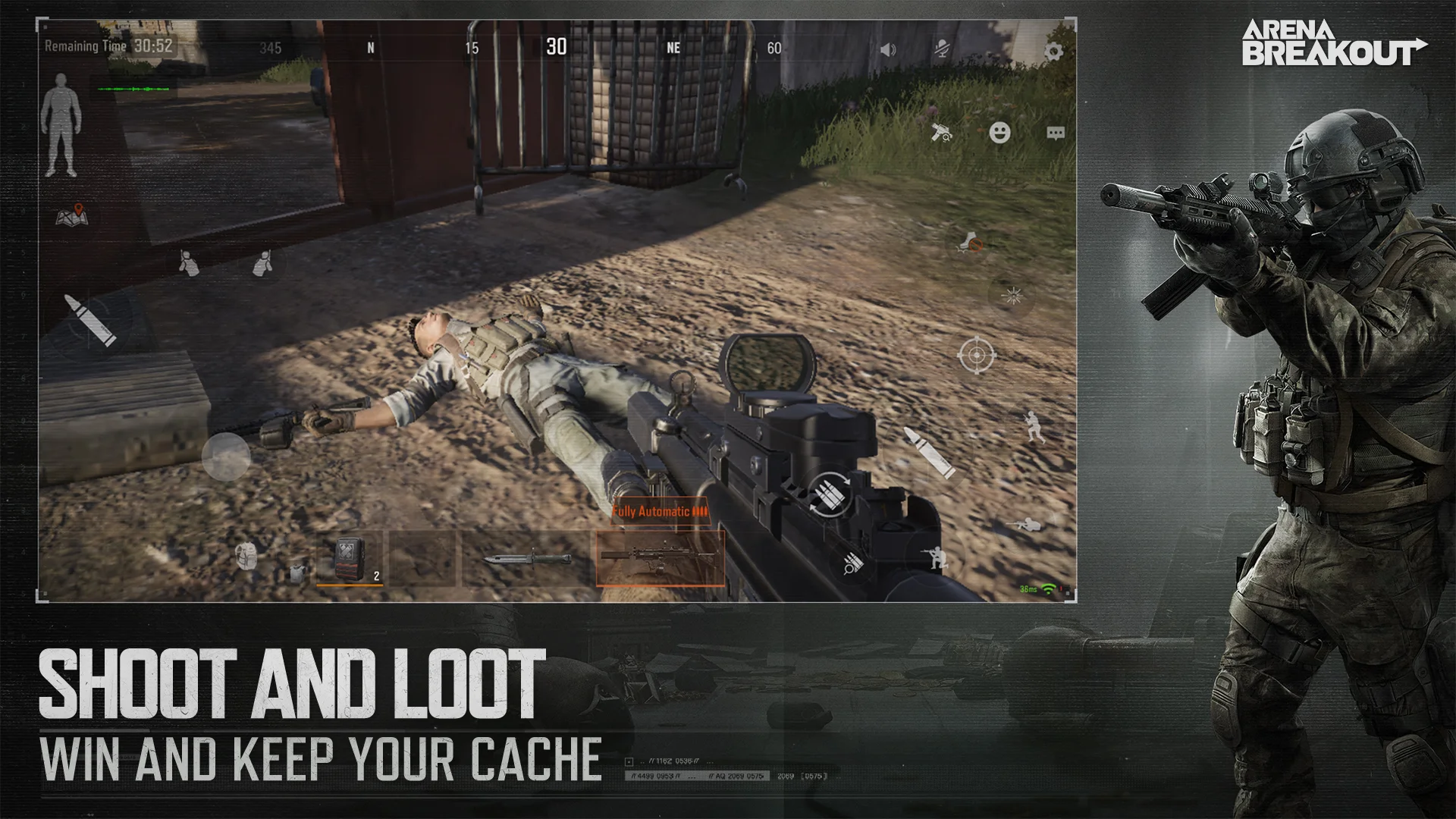
Verdict
Tarkov on your phone. The brutal learning curve is the only thing stopping it from claiming the top spot.
Who it’s best for
Hardcore extraction shooter fans, particularly anyone who fell out of Escape From Tarkov because they couldn’t commit to PC sessions any more.
Also tactical players who want their gunplay to have real consequences. Not for anyone looking for a quick session before bed.
What stands out?
The risk-reward loop is the most addictive in mobile tactical shooting. Enter a map with whatever gear you brought, fight other players and AI for loot, and either extract alive with everything or die and lose all of it. The Gunsmith system has more attachment options than most paid console shooters.
Ammo type matters more than weapon choice in 80% of fights. T4 ammo against a T5 vest will tickle the target, while T6 against the same vest is a one-tap.
Audio is the best on mobile, full stop. You can hear which side of a wall someone is reloading on, and whether footsteps on the floor above are coming towards your room or moving away. Knowing how to read those cues is more important than your trigger speed.
The honest downside
The first 10 hours are brutal. You will lose gear repeatedly to players who already know the maps, the audio cues and the meta.
The Battle Pass progression is also weighted toward paid players in a way that can feel uncomfortable. The free track gives meaningfully thinner rewards at equivalent tiers. Multiple App Store reviews call it out, fairly.
Versus the alternatives
If you’re weighing Arena Breakout against Delta Force Mobile’s Hazard Operations extraction mode, Arena Breakout is the deeper, harsher, more Tarkov-faithful experience.
Delta Force is the gentler on-ramp and works better if you also want a campaign and large-scale modes in the same install. Arena Breakout is the purist pick.
Price
Free-to-play. Monthly Advanced Battle Pass is around $0.99. Monthly Premium Battle Pass is around $3.99. There’s also a Quarterly Premium Bundle at around $10.98 that’s the strongest long-term value if you’re committing to the game. Bonds (the premium currency) are purchasable but optional for serious play.
3. Mech Arena
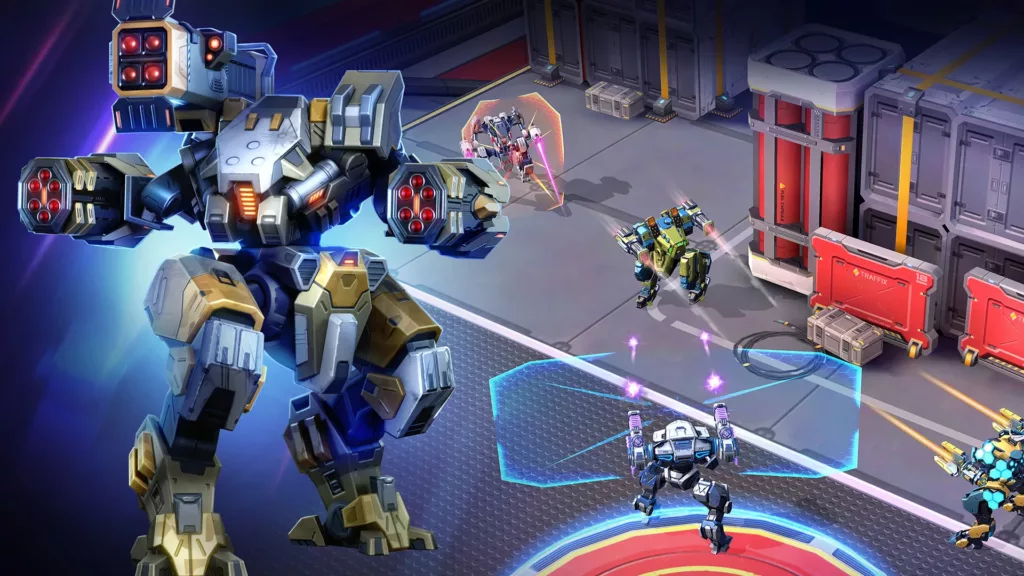
Verdict
The best tactical mech shooter on mobile, and the most overlooked tactical shooter on the platform in 2026.
Who it’s best for
Anyone who came up on Hawken, MechWarrior, Heavy Gear, Titanfall or any other mech-combat game where positioning and ability timing mattered more than reflex speed.
Also tactical FPS players who are sick of human-character shooters and want a complete change of rhythm. Anyone over 30 who finds twitch shooters punishing on their eyes.
What stands out?
Combat is slow, weighty, and deliberate. Every shot lands with real impact. Positioning matters more than aim. Ability timing creates the kind of decision tree tactical shooters live or die by, like the constant “do I burn my dash now to escape, or hold it for the inevitable rotation?” question.
The customisation goes deeper than it looks at first glance: five mech classes (Attacker, Scout, Tank, Support) with multiple distinct mechs in each, a weapon system where loadout actually changes outcomes (energy weapons drain shields, kinetics punch armour, missiles have different lock patterns and ranges), and a pilot collection system (Rare, Epic, Legendary) that layers passive bonuses on top.
You can engineer a Tank with a specific energy loadout to counter a known enemy comp, and that engineering actually changes outcomes. Cross-platform between mobile and PC, which the older tactical-shooter crowd will appreciate. Over 35 maps so far, each rewarding different tactical setups.
The honest downside
The mech sub-genre is naturally less universally appealing than “classic tactical FPS” or “extraction looter shooter.” If you don’t already love mechs, the first hour can feel slow rather than tactical.
Top-tier mechs and weapons also take real time to grind for as a free player. You can absolutely play F2P, but the meta progression curve is closer to a gacha game than a traditional shooter.
Versus the alternatives
If you’re choosing between Mech Arena and War Robots, it comes down to perspective and pace. Mech Arena is faster, third-person, more skill-expressive in moment-to-moment combat.
War Robots is top-down isometric, slower, with a much bigger mech library after a decade of content. Mech Arena is the better tactical shooter. War Robots is the better collector experience.
Price
Free-to-play. No mandatory passes. In-app purchases are largely cosmetic plus mech and pilot bundles that accelerate progression rather than gating content.
Monthly subscriptions sit in the $4.99 to $9.99 range and offer mostly time-saving boosts. Possible to be competitive without spending if you’re patient.
4. Delta Force Mobile
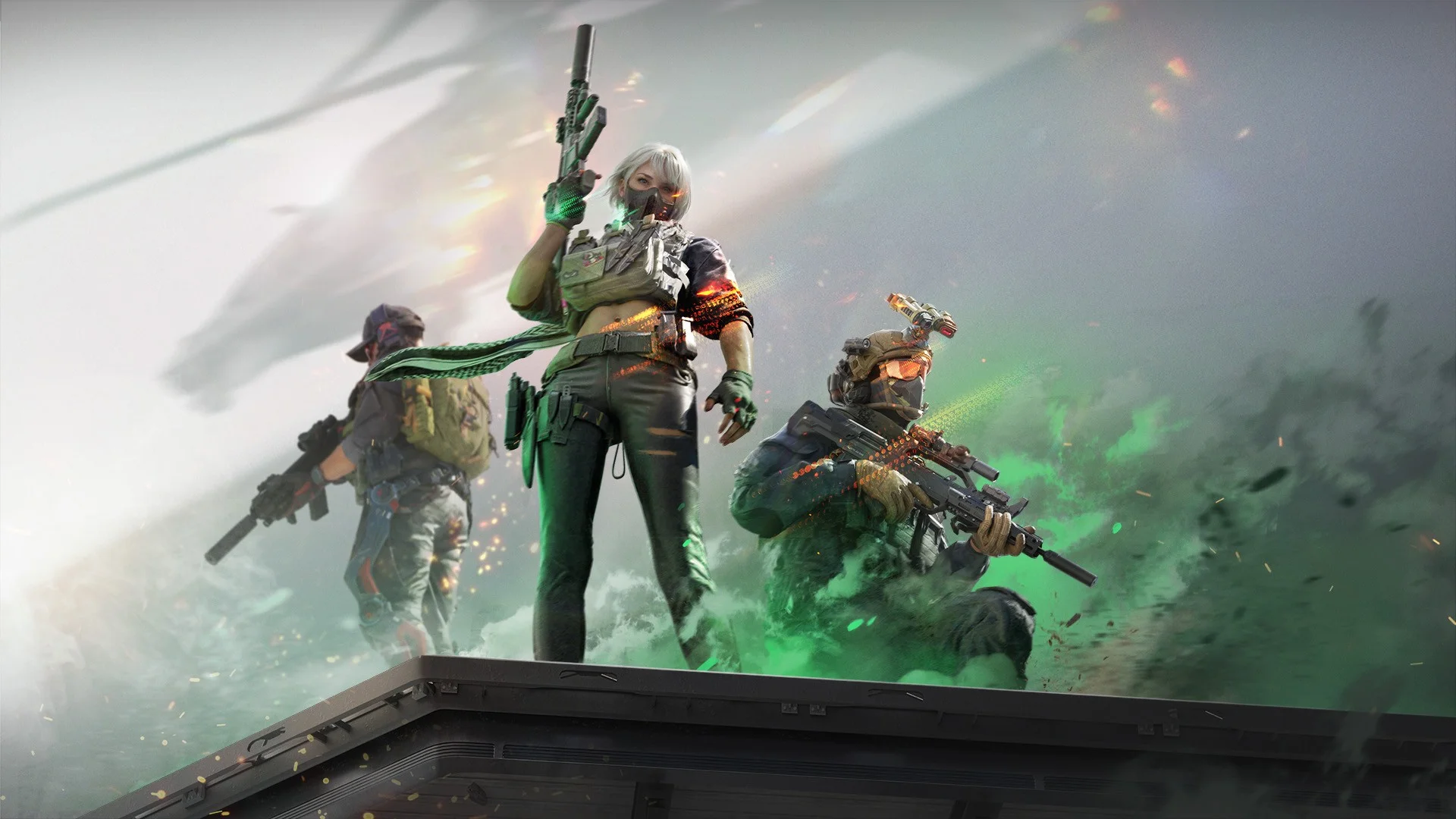
Verdict
The most polished large-scale tactical shooter on mobile, and the Battlefield-shaped hole in the market is now properly filled.
Who it’s best for
Anyone who grew up on Battlefield 2 through to Battlefield 4 and has been waiting a decade for that combined-arms feel on a phone. Also tactical FPS players who want vehicles, capture points and squad-scale combat rather than 5v5 close-quarters fights.
What stands out
Warfare mode is the obvious draw. Up to 32v32 combined-arms combat on large maps, with vehicles, capture points and four operator archetypes (Assault, Support, Engineer, Recon) that create real team-comp considerations.
A coordinated squad of one Engineer (anti-vehicle) plus a Recon (spotter) plus three Assault plays meaningfully differently from five Assaults pushing the same point, and the game rewards the comp diversity.
Hazard Operations is the extraction mode, which goes head-to-head with Arena Breakout, plus there’s a nostalgia-bait single-player campaign for anyone who played Delta Force: Black Hawk Down. Frame rates can hit 144 FPS on capable hardware.
No pay-to-win mechanics. Bundles are cosmetic. Pocket Tactics called it “the only mobile FPS worth your time” at launch.
The honest downside
The menu and UI can feel cluttered on a mobile screen, especially the first few times you’re trying to manage loadouts, attachments, and operator selection in the pre-match window.
Matchmaking can also be inconsistent at off-peak hours. Expect to occasionally drop into lobbies that aren’t quite full.
Versus the alternatives
If you’re deciding between Delta Force Mobile and Rainbow Six Mobile, it comes down to scale preference. R6 Mobile is room-clearing 5v5 tactical depth.
Delta Force is squad-and-vehicle large-scale tactical combat. They’re different sub-genres of tactical shooter, and most players will eventually want both installed.
Price
Free-to-play across all platforms. Cosmetic battle passes priced in the $4.99 to $9.99 tier. No pay-to-win mechanics.
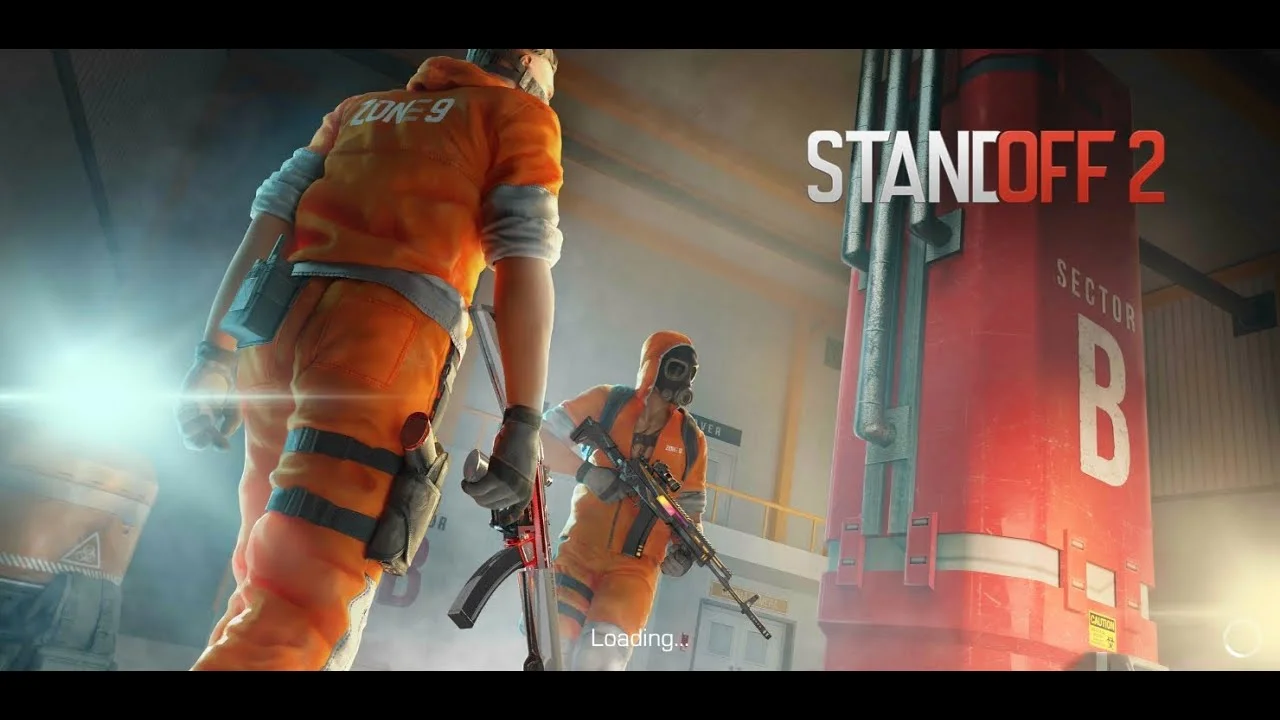
5. Standoff 2
Verdict
The closest thing to Counter-Strike pacing you’ll find on a phone.
Who it’s best for
Anyone who spent serious time in CS 1.6, CS:Source, or CS:GO. The map rhythm and economy will feel immediately familiar.
Particularly good for players who want competitive ranked ladders without the abilities-and-gadgets layer R6 Mobile adds.
What stands out?
5v5 bomb-defusal rounds with a buy phase at the start of each one. AWP-style sniper rifles for the dedicated AWPer on your team. Map design echoes Dust 2 and Mirage in spirit, with the mid-control fights and B-rush meta CS veterans will recognise within a round.
The competitive scene is bigger than people outside the playerbase realise. There’s tournament money, organised tier play, and the matchmaking holds up properly at higher MMRs. Skin economy works similarly to CS:GO’s, complete with case openings and a small third-party trading market.
The honest downside
Touch controls are fiddlier than R6 Mobile’s, and the game has fewer concessions to mobile-first design (no smart-ping system, less customisable HUD).
Controller support is solid, but at higher ranks you’re effectively required to use one, which closes the door on quick mobile-only sessions.
Versus the alternatives
Standoff 2 versus Critical Ops is the closest direct comparison. Standoff 2 has higher production values, more polished gunfeel, a bigger competitive scene and a real skin economy. Critical Ops is leaner and more focused on pure aim mechanics.
Standoff 2 is the better all-round game. Critical Ops is the better choice for purists who want to strip everything down to crosshair placement and movement.
Price
Free-to-play. Skin cases and bundles are the main monetisation. No battle pass paywall and no progression gates.
You can be competitive at any rank as a free player. Skin prices range from a few dollars to several hundred for the rarest items, similar to CS:GO’s market.
6. Critical Ops
Verdict
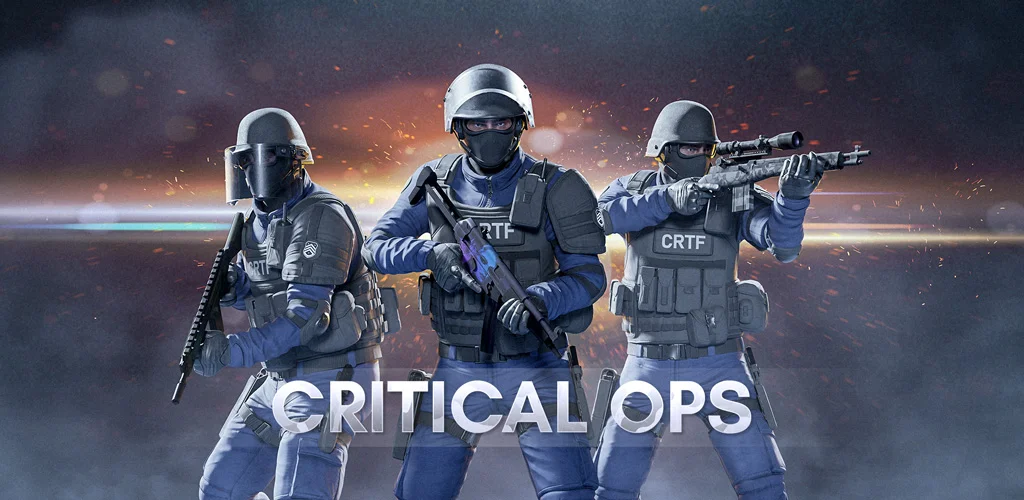
Tactical 5v5 stripped to the bones. No operators, no abilities, no fluff.
Who it’s best for
CS purists who specifically want a game where the only things that matter are aim, positioning, and crosshair placement. Also anyone who finds R6 Mobile too gadget-heavy or Delta Force too sprawling.
What stands out
The lack of frills is the whole appeal. Two teams of five, a bomb, a clock, and whatever weapon you can afford this round. Matches are short and clean.
The gunplay model has been refined over years of updates, and the competitive playerbase at the top end takes the game properly seriously. There’s a small but real esports scene with regular tournaments.
The honest downside
Production values are visibly leaner than Standoff 2’s. The maps look more dated, the UI feels older, and the overall presentation can feel like a game that hasn’t had a major visual refresh in a while. The smaller playerbase also means matchmaking takes longer at high ranks during off-peak hours.
Versus the alternatives
Critical Ops only really competes with Standoff 2 in this space, and the deciding factor is whether you want polish or purism.
If you’d trade modern presentation for a leaner, less cluttered tactical experience, this is your pick. If you want the more complete package, choose Standoff 2.
Price
Free-to-play. Skin-based monetisation in the $0.99 to $19.99 range. No battle pass paywall, no pay-to-win mechanics. Possibly the cleanest F2P model on this list.
7. Bullet Echo
Verdict
The wildcard. Top-down tactical stealth that doesn’t play like any other shooter on this list.
Who it’s best for
Players who want a tactical shooter that’s completely different from everything else they’ve played. Also a strong pick for players over 30 who want zero advantage to twitch reflexes in any direction.
What stands out
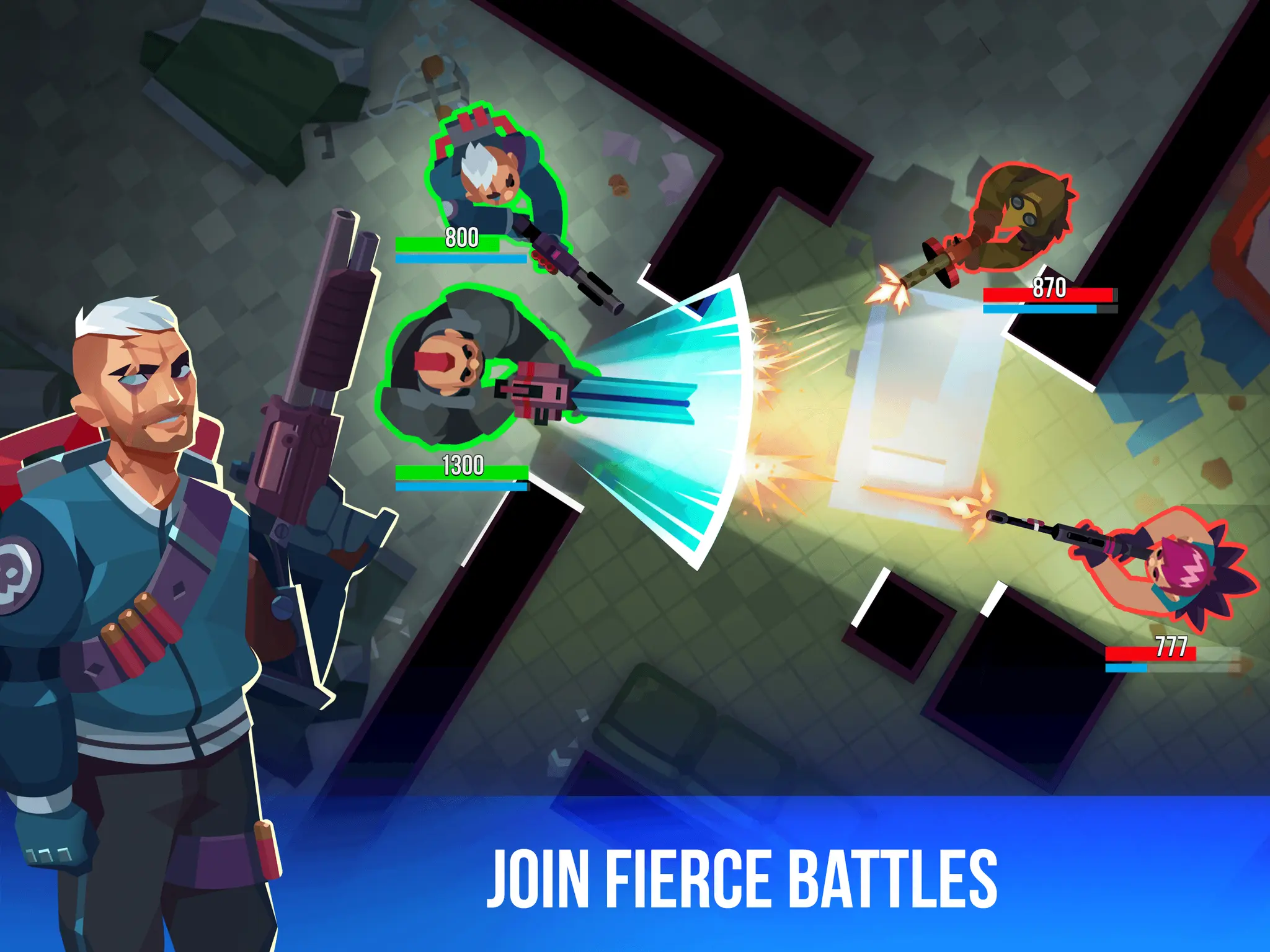
Vision is limited to whatever your hero’s flashlight reveals. You hear footsteps before you see them. You creep through warehouses and ambush enemies who haven’t spotted you yet.
The pacing is glacial by mobile shooter standards, and the format means tactical thinking carries more weight than mechanical aim in literally every engagement. Hero classes (sniper, scout, brawler, healer) create real comp synergies. Matches are 3 to 5 minutes.
The honest downside
It’s the shallowest pick on this list in terms of long-term tactical depth. After 50 hours, you’ve seen most of what the game has to offer mechanically.
Subsequent play is mostly hero collection and cosmetic progression rather than meaningful new tactical challenges. Some Rainbow Six Mobile veterans bounce off it within a few rounds as feeling “gimmicky.”
Versus the alternatives
Bullet Echo doesn’t really compete with anything else on this list directly. It’s the palate-cleanser pick for when you’ve been grinding Arena Breakout raids or R6 ranked and you want a tactical experience that hits different parts of your brain.
Price
Free-to-play. Hero unlocks and skin packs in the $4.99 to $19.99 range. You can play competitively as a free player but the hero unlock grind is significantly faster with the Premium Pass at around $9.99.
The bottom line
The tactical mobile shooter scene is in the best shape it’s ever been. Five years ago, this list would have been three games and a lot of asterisks. In 2026, you can pick the exact sub-genre you want and find a serious option waiting.
- For pure tactical FPS depth: Rainbow Six Mobile. Nothing else on the platform touches the operator-and-gadget puzzle.
- For Tarkov-style high-stakes extraction: Arena Breakout. Pay the learning-curve tax, get the reward.
- For tactical combat that isn’t humans-shooting-humans: Mech Arena. Slow, weighty, and a complete change of rhythm from everything else here.
- For Battlefield-scale combined arms: Delta Force Mobile. The most polished large-scale tactical shooter on mobile.
- For pure CS-style tactical 5v5: Standoff 2 (polished) or Critical Ops (purist).
- For something different: Bullet Echo.
The only mistake left to make in this space is downloading the latest CoD Mobile event and expecting it to scratch the tactical itch. It won’t. These will.
