

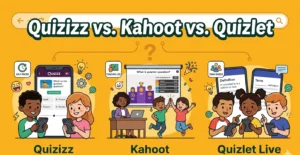




Kahoot and Quizizz both turn assessments into something learners actually want to do. Both run on any browser, work across schools and corporate training rooms, and give participants immediate feedback after each answer. The difference shows up in structure — one is host-paced and competition-driven, the other is student-paced with deeper analytics and broader question variety.
How Many Users Do Kahoot and Quizizz Have?
Kahoot reported over 70 million monthly active users as of its last published figures. Quizizz reached over 20 million monthly active users, with growth driven in part by its expansion into corporate training. Kahoot holds a larger presence in K–12 classrooms; Quizizz has gained ground in higher education and workplace learning.
How Does Kahoot Work in the Classroom?
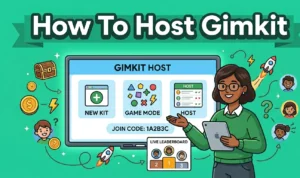
Kahoot runs as a host-controlled session. Questions display on a shared screen — projector or monitor — while participants answer on their own devices. Points go to those who answer correctly and quickly, and a leaderboard updates after each question. Background music and countdown timers keep energy high throughout the session.
This format works best for short live reviews and rapid knowledge checks. Participants join via a PIN at the Kahoot.it join page. For hosts building their first session, creating a Kahoot quiz takes under five minutes. Kahoot also integrates with Microsoft Teams, Zoom, and PowerPoint, so sessions can run without switching tools.
How Does Quizizz Work for Students and Teachers?
Quizizz puts both the question and answer choices directly on each participant’s device. No shared display is required. Students move through questions at their own pace, which suits homework and remote learning well. The format also reduces the pressure that timed, host-paced sessions create for slower readers or anxious test-takers.
The platform supports 20 question types, including video-based ones. AI Studio can build a quiz automatically from a document, a URL, or a typed prompt. Answer explanations appear after each question. The Adaptive Question Bank uses spaced repetition to reinforce weak areas over time. For plan details before signing up, the Quizizz pricing breakdown covers each tier.
Kahoot vs. Quizizz: Feature Comparison
| Feature | Quizizz | Kahoot |
|---|---|---|
| Question types | 20 (incl. video) | Multiple choice + T/F |
| Self-paced mode | Yes | No |
| AI quiz builder | Yes | Limited |
| Real-time feedback per question | Yes | No |
| Participant dashboard | Yes | No |
| Advanced analytics | Yes | Basic |
| LMS integration | Yes | Limited |
| Works as homework | Yes | Limited |
| Shared content library | Limited | Yes |
| Tool integrations | LMS / HRMS | Teams, Zoom, PowerPoint |
Kahoot vs. Quizizz Pricing Compared
Kahoot’s team plan charges $39/month per host. Quizizz uses a per-participant model at $0.50/month, which often runs cheaper for smaller groups. Both platforms offer free tiers with core features. Kahoot also offers a free trial on its paid plans. For a three-way comparison that includes Quizlet, Kahoot vs. Quizizz vs. Quizlet covers all pricing side by side.
Student Preference: Kahoot vs. Quizizz
A 2024 multi-school survey recorded 48% of students preferring Kahoot and 44% preferring Quizizz — a narrow gap that has tightened as Quizizz expanded its feature set. Students who enjoy competition lean toward Kahoot. Those who prefer working at their own speed choose Quizizz. Quizlet Live drew 8%, mostly during collaborative vocabulary sessions.
Which Platform Should You Use — Kahoot or Quizizz?
For live sessions where group energy matters, Kahoot is the more practical pick. Its integrations with Teams, Zoom, and PowerPoint mean no switching between windows during a session. The shared library is a genuine time-saver for large organizations reusing content across multiple hosts.
Quizizz pulls ahead when tracking and structure matter. Tag-based reporting shows how participants perform across specific topics over time. Full course support — not just standalone quizzes — and LMS connectivity make it a better fit for structured training programs or blended learning setups.
Most instructors end up using both, selecting based on what a given session requires. If neither fully fits, Blooket vs. Kahoot covers a newer platform with a different gameplay structure worth considering. For lighter Kahoot use, the practice of choosing funny Kahoot names for team sessions is itself a small signal of how the platform positions engagement over depth.
FAQs
Is Kahoot or Quizizz better for classroom use?
Kahoot works better for live, competitive sessions where the class is together. Quizizz suits self-paced learning, homework assignments, and situations where detailed performance data is needed across topics and over time.
Can students join Quizizz without an account?
Yes. Students join with a code and no registration is needed to play. A Quizizz login is only required for hosts creating or managing quizzes, not for participants joining a session.
Does Kahoot have a free plan?
Kahoot has a free tier for basic quiz creation and hosting. Paid plans add detailed reports, shared team libraries, ghost mode, and integrations with tools like Microsoft Teams and Zoom.
Which platform has better analytics — Kahoot or Quizizz?
Quizizz provides more detailed analytics including topic-level tracking, individual participant dashboards, and LMS-compatible reporting. Kahoot covers basic session results but lacks the depth that Quizizz offers for ongoing performance monitoring.
Does Quizizz integrate with Google Classroom?
Yes. Quizizz integrates with Google Classroom, Canvas, and Schoology, making it straightforward to assign quizzes and sync grades within an existing LMS workflow.

